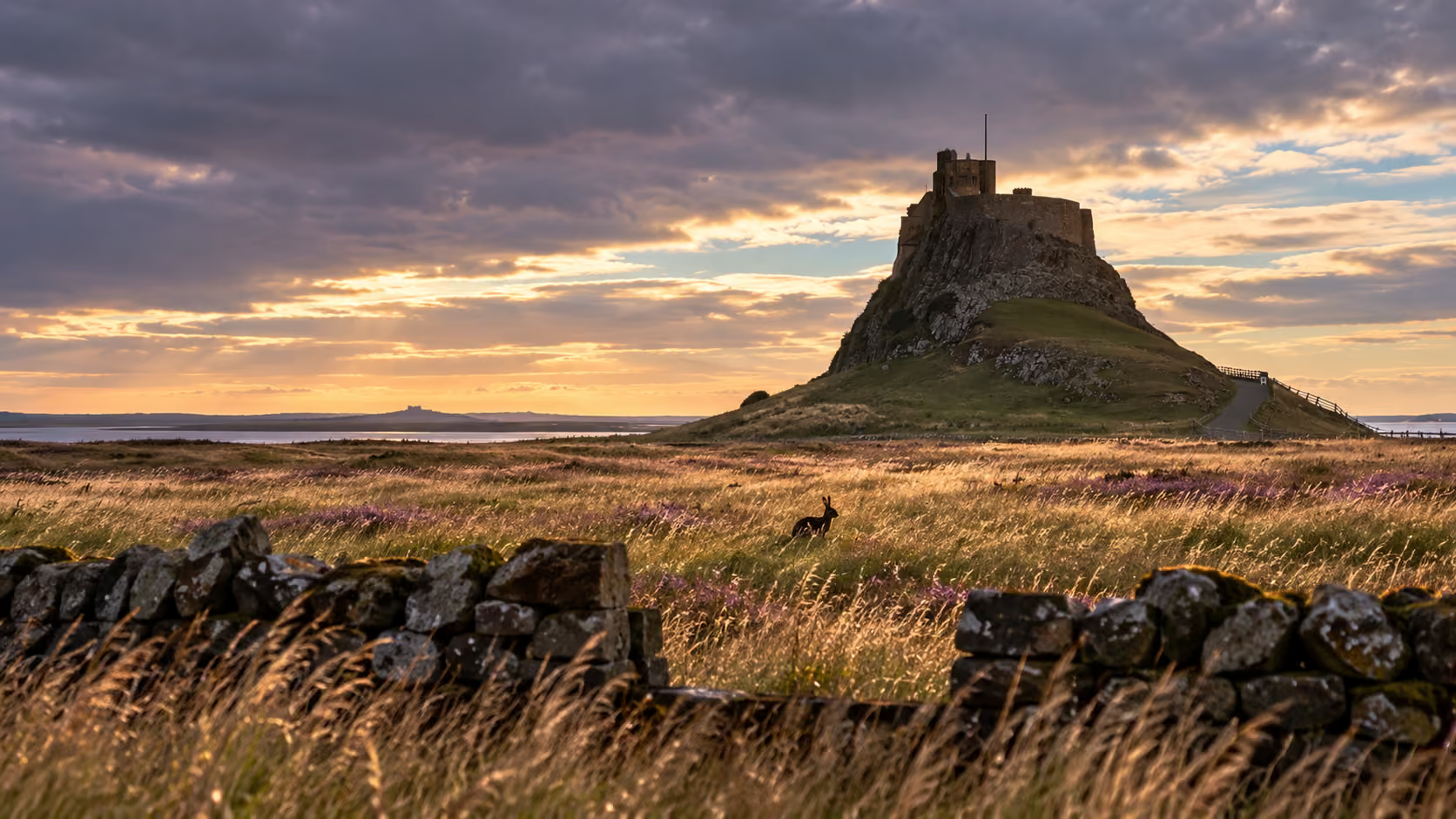
Our Time at Lindisfarne Castle
A Bit of Colditz
From the outside, you could perhaps be forgiven for thinking:
I'll sit this one out.
Sitting high on its rocky outcrop, Lindisfarne Castle isn't exactly welcoming.
In fact, as we approached, I decided it looked rather like something from the 1970s television series Colditz.
All it needed was somebody attempting to escape over a wall using a rope made from bedsheets.
We might actually have walked straight past.
But we're National Trust members, entry was included with our membership, and we'd come this far.
“Might as well have a look.”
Which isn't the most promising beginning to a review.
Not Quite the Castle We Expected
The interesting thing is that Lindisfarne Castle hasn't always been the romantic little retreat it eventually became.
A fortification was built here in the 16th century, using the island's strategic position close to the Scottish border and overlooking the harbour. Stone from the ruins of Lindisfarne Priory was reportedly used in its construction.
For centuries its purpose was decidedly practical rather than comfortable.
Then, in 1901, Edward Hudson bought it.
Hudson was the founder of Country Life magazine and brought in one of Britain's great architects, Sir Edwin Lutyens, to turn the old fort into a holiday home.
And that's the part that changed the visit for us.
Because once you know that, you stop looking at Lindisfarne as simply an old castle.
You start looking for the house hidden inside it.
Much Better Than We Expected
And...
we loved it.
Perhaps loved is too strong.
Actually, no. I'm sticking with loved.
It's modern by castle standards and you're not wandering through grand medieval banqueting halls imagining knights and kings.
It's smaller, more intimate and much more peculiar than that.
There are thick walls, little passages, unexpected rooms and windows looking out across an enormous expanse of Northumberland sky and sea.
It feels like somewhere people actually lived rather than somewhere preserved simply to demonstrate how people once lived.
And I found myself thinking:
I'd love to be here in winter.
Not on a pleasant summer afternoon.
Proper winter.
A North Sea storm outside. Wind battering against the windows. Rain coming horizontally across the island. Fire going, something decent in a glass and absolutely no intention of leaving until morning.
Lucy thought this sounded wonderful.
Until I suggested we could recreate our earlier trick and deliberately miss the causeway crossing again.
Apparently once was enough.
The Surprise of the Day
The castle wasn't the reason we'd come to Holy Island.
And from outside, we'd almost talked ourselves out of bothering.
That would have been a mistake.
It doesn't have the scale or medieval drama of Bamburgh, nor the romantic ruins of Dunstanburgh.
But that's not really the point.
Lindisfarne Castle is something quite different: part fortress, part Edwardian country retreat, perched improbably on a lump of volcanic rock at the edge of an island that periodically loses its road to the mainland.
Once we'd been inside, that severe exterior suddenly made much more sense.
And somehow became rather beautiful.
Heather & Sand verdict: Don't judge Lindisfarne Castle from the bottom of the hill. We nearly skipped it and ended up finding it one of the most interesting parts of Holy Island. Come for the extraordinary setting and the history, but stay for Lutyens' transformation of a stark old fort into a wonderfully atmospheric home. And if the National Trust ever offers an overnight stay during a January storm, put our names down first.
Read the full story from our visit: Where Is Everybody? — A Strange Afternoon on Holy Island