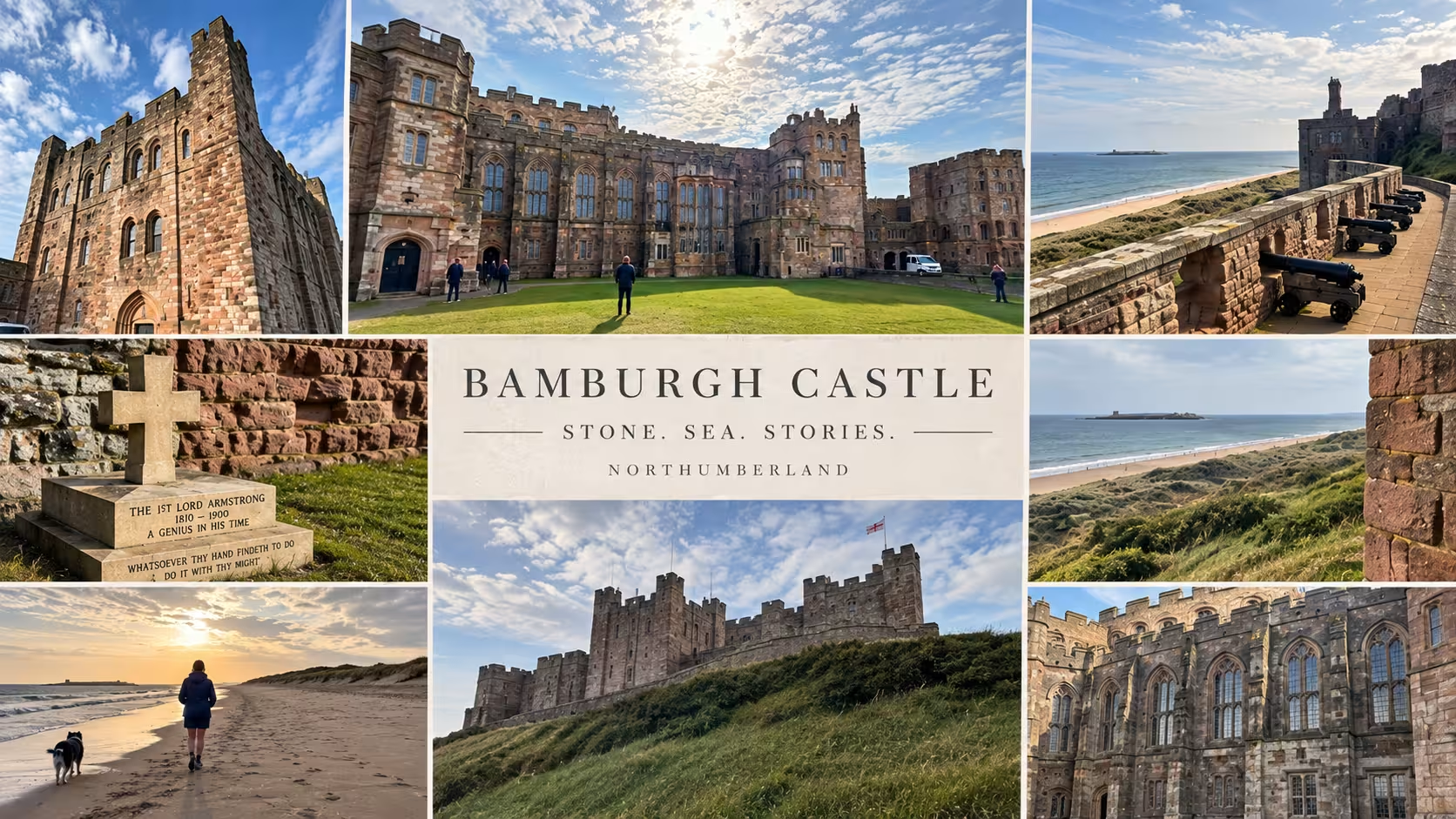
The dramatic clifftop castle at the heart of the village, with state rooms, centuries of history and a beach right on its doorstep.
Even if you think you know Bamburgh Castle, go inside. We thought we knew it too.
- Good for: History · Architecture · Photography · Rainy days · Northumberland views
- Allow: 2–3 hours, longer if you stop for something to eat
- Don’t miss: The King’s Hall and the views from the castle
- Dogs: Worth checking the current castle rules before visiting
- H&S tip: Don’t make the castle the end of the day. Save a little time for Bamburgh beach afterwards.
- We’d go back: Absolutely. We already know we missed things.
Bamburgh Castle — A Brief History
Standing high above the Northumberland coastline, Bamburgh Castle has witnessed more than 1,400 years of kings, battles, invasions and remarkable restoration.
547 AD — The First Fortress
King Ida of Bernicia establishes a wooden stronghold on the rocky outcrop, beginning Bamburgh's long association with the Anglo-Saxon kings of Northumbria.
634 AD — King Oswald and Christianity
King Oswald returns to Northumbria and invites St Aidan from Iona, helping establish Lindisfarne as an important centre of early Christianity.
993 — The Viking Attack
Viking raiders attack and devastate Bamburgh, leaving the ancient stronghold badly damaged.
1095–12th Century — The Norman Castle
Bamburgh becomes a royal fortress under Norman rule. Its great stone keep, which still dominates the castle today, dates from the 12th century.
1464 — The Wars of the Roses
Bamburgh becomes the first castle in England to fall to artillery fire during a siege. Cannon bombardment by Yorkist forces brings down its once-formidable defences.
1610 — Into Private Ownership
King James I grants Bamburgh Castle to Claudius Forster. Over the following decades, the castle gradually falls into ruin.
1700s — A Castle That Cared for People
Under the Lord Crewe charitable trust, Bamburgh becomes a centre for local welfare, providing a school, medical care and assistance for the poor and shipwrecked sailors.
1786 — Lifesaving Innovation
Dr John Sharp helps establish pioneering coastal rescue services, including an early lifeboat at Bamburgh.
1894 — The Armstrong Family Arrives
Victorian industrialist and inventor William George Armstrong purchases the semi-derelict castle for £60,000 and begins an ambitious restoration.
1901 — A New Beginning
Following Armstrong's death in 1900, his great-nephew completes the restoration, transforming Bamburgh into a magnificent family residence.
Today — Still in the Armstrong Family
Bamburgh Castle remains privately owned by the Armstrong family, with Francis Watson-Armstrong, a fifth-generation family custodian, and his wife Claire closely associated with its care.
The castle is both a family home and a major visitor attraction, welcoming people from around the world to explore one of Northumberland's most extraordinary landmarks.