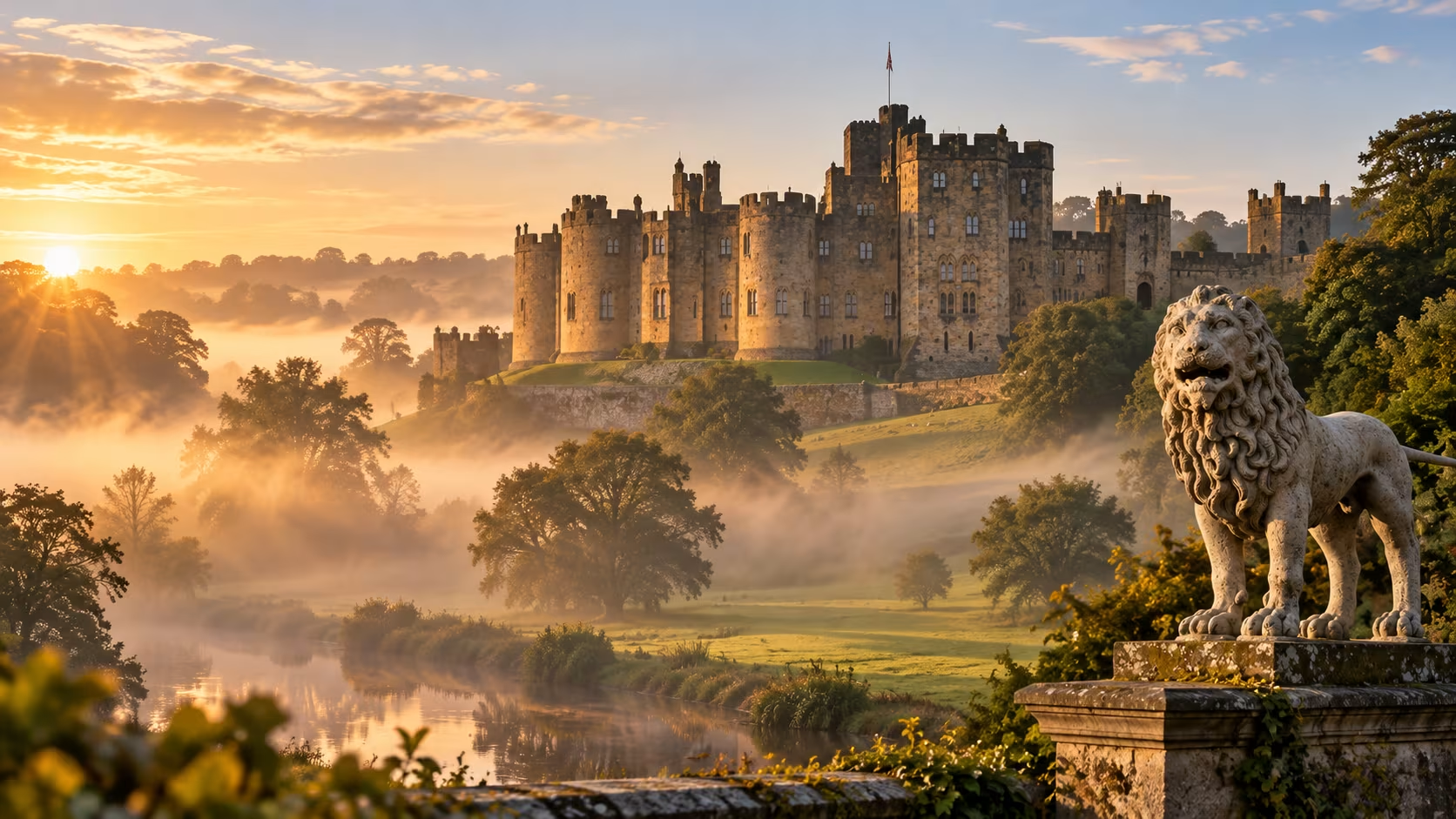
Tom has been asking me for some time to write something about Northumberland's great family names. Not just the aristocracy, he insisted, but the families who lived in the valleys, defended the borders and occasionally helped themselves to their neighbours' livestock.
I suspect he had the Border Reivers in mind.
It's an interesting subject because Northumberland has always been a place where family names mattered. They could open doors, command armies, secure marriages and, in less fortunate circumstances, get you hanged.
Some families arrived with the Normans and acquired enormous estates. Others emerged from the wild country along the Scottish Border, where a good horse and a few armed relatives were considerably more useful than a title.
A surprising number of those names are still familiar today.
And some of their stories are quite extraordinary.
The Percys — Kings in the North
If Northumberland has a royal family of its own, it must surely be the Percys.
Their story begins not in Northumberland but in Normandy, where the family took its name from Percy-en-Auge. William de Percy arrived in England shortly after the Norman Conquest, establishing a dynasty that would eventually become one of the most powerful in the country.
The family's association with Northumberland began in earnest in 1309, when Henry de Percy purchased Alnwick Castle.
It proved a rather good investment.
More than seven centuries later, Alnwick remains the family seat.
The Percys were never particularly content to sit quietly behind their castle walls. They fought the Scots, defended the northern frontier, supported kings, rebelled against kings and occasionally found themselves on the losing side of a very serious argument.
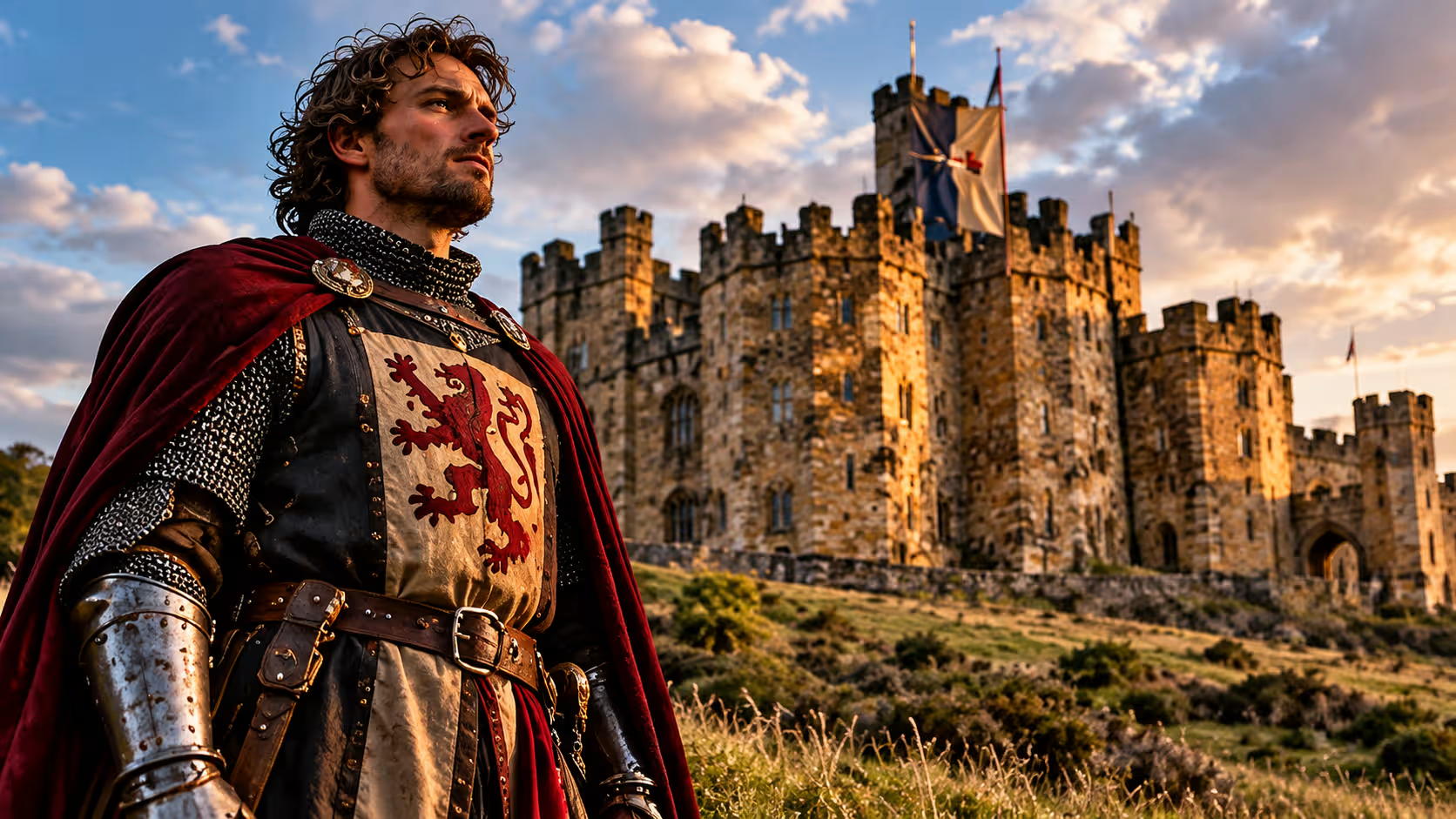
Perhaps the most famous was Sir Henry Percy, better known as Harry Hotspur.
A celebrated medieval warrior, Hotspur fought at Otterburn in 1388 and eventually rebelled against Henry IV. He was killed at the Battle of Shrewsbury in 1403.
Shakespeare immortalised him, and centuries later his name found its way into football through Tottenham Hotspur.
Not bad for a Northumbrian knight who died more than 600 years ago.
The Percy line survived some remarkable upheavals, including occasions when the male line ended and the family name continued through marriages and inheritance.
In 1750, Sir Hugh Smithson adopted the Percy surname after marrying the family heiress. He subsequently became the first Duke of Northumberland.
The present ducal family descends from that union.
Where to discover their story: Alnwick Castle and Warkworth Castle. Between them, they offer perhaps the finest introduction to medieval Northumberland's most influential family.
The Charltons — When Dinner Was a Warning
Travel west into North Tynedale and the history becomes rather less polished.
The Charltons were one of the four great riding surnames of the valley, alongside the Robsons, Dodds and Milburns.
These were not clans in quite the romantic Highland sense. They were extended families whose loyalties, feuds and alliances shaped life along the Border.
Their world was one of fortified farmhouses, armed horsemen and an uncertain distinction between legitimate cattle ownership and temporary possession.
The Charltons established themselves at Hesleyside, near Bellingham, during the fourteenth century. Remarkably, the estate remains associated with the family today.
But the story I particularly enjoy concerns the Charlton Spur.
According to family tradition, when the household's food supplies ran low, a riding spur would be presented to the head of the family on a platter.
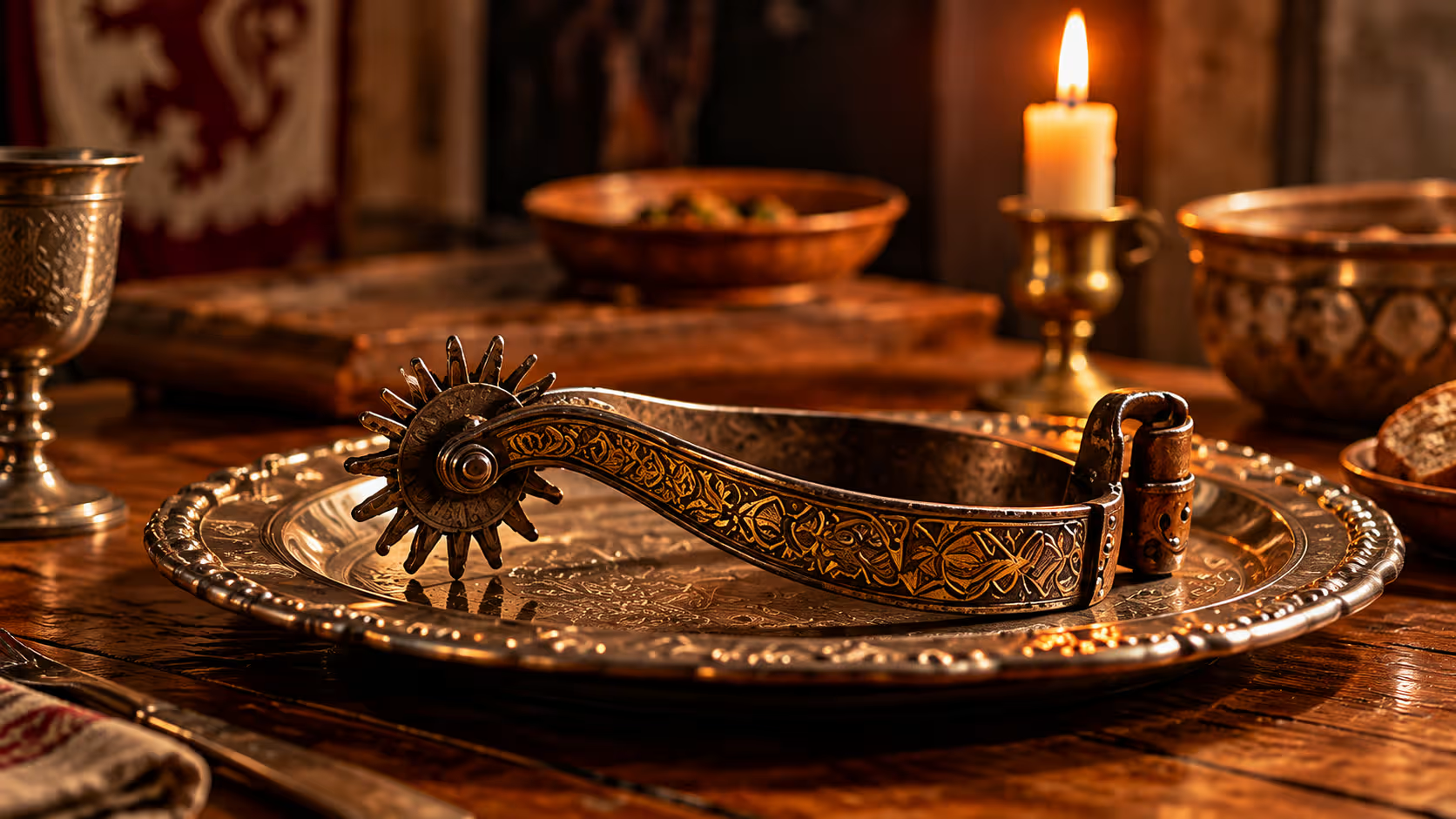
The message required no explanation.
It was time to saddle the horses and find something for dinner.
Preferably something belonging to somebody else.
One imagines the neighbours were less enthusiastic about this arrangement.
The spur itself survives at Hesleyside, a small object that says rather more about Border life than a whole cabinet of swords.
Where to discover their story: Bellingham and North Tynedale. Hesleyside Hall is private, although occasional organised visits offer opportunities to explore its history. At Hexham Old Gaol you can trace the riding families' names, and perhaps your own.
The Armstrongs — From Border Raiders to Electric Light
Few Border surnames acquired a more formidable reputation than Armstrong.
Their principal strongholds lay across the Scottish Border, particularly in Liddesdale, but their influence extended deep into Northumberland.
The Armstrongs were among the most powerful riding families of the sixteenth century.
Johnnie Armstrong of Gilnockie became something of a Border legend. In 1530, he was summoned to meet James V of Scotland and subsequently hanged alongside a number of his followers.
His story survived in ballads long after the riding clans had been suppressed.
Another Armstrong, Kinmont Willie, became famous after being rescued from Carlisle Castle in 1596 during an audacious raid led by the Scotts of Buccleuch.
It is the sort of episode that sounds invented until you discover that it really happened.
Yet Northumberland's most celebrated Armstrong belongs to an entirely different chapter of history.
William George Armstrong, born in Newcastle in 1810, became one of Victorian Britain's great engineers and industrialists.
His inventions transformed hydraulic machinery, manufacturing and military engineering.
At Cragside, near Rothbury, he created a house that became the first in the world to be illuminated using hydroelectric power.
Imagine that for a moment.
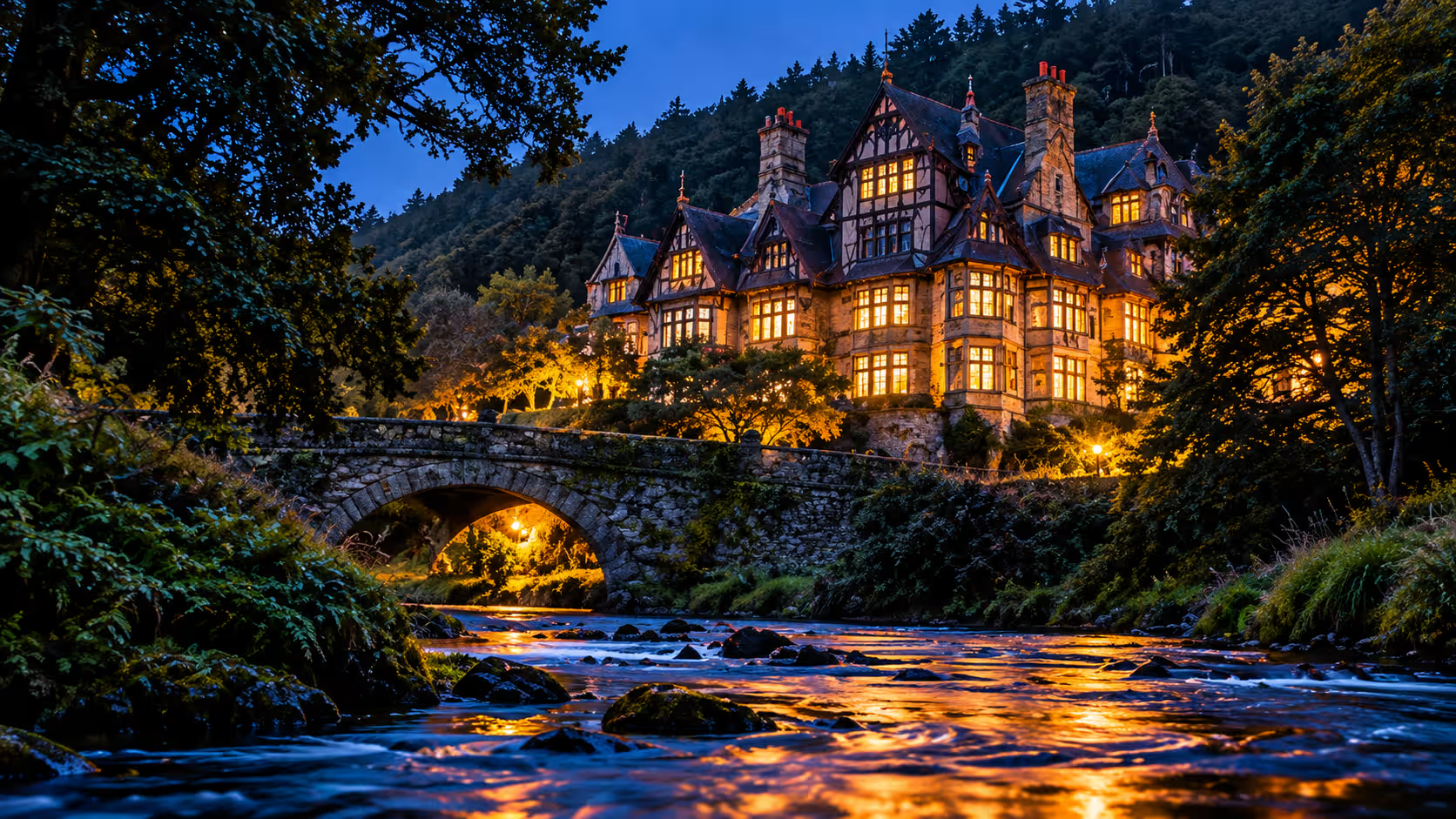
While much of Britain still relied on candles and gaslight, Armstrong was using the power of water to illuminate his home.
He later purchased Bamburgh Castle in 1894 and began its restoration.
There is no established genealogical connection between Lord Armstrong and the medieval riding clan, but the contrast is irresistible.
One famous Armstrong name belonged to men who stole livestock by moonlight. Another belonged to a man who helped illuminate the modern world.
Where to discover their story: Cragside and Bamburgh Castle, two of Northumberland's most remarkable historic properties.
The Fenwicks — A Horse, a King and a Molehill
The Fenwicks were an ancient Northumberland family whose name came from the settlement of Fenwick near Matfen.
For centuries they were prominent landowners and Border figures, with their principal seat eventually established at Wallington.
Their history contains the usual mixture of political ambition, military service and family alliances.
But it also contains one of the strangest stories associated with an English king.
Sir John Fenwick, a committed Jacobite, was implicated in a plot against William III and executed in 1697.
According to a famous tradition, a horse once belonging to Fenwick, named Sorrel, subsequently became the king's mount.
In 1702, William's horse stumbled over a molehill. The king fell, suffered an injury and died soon afterwards.
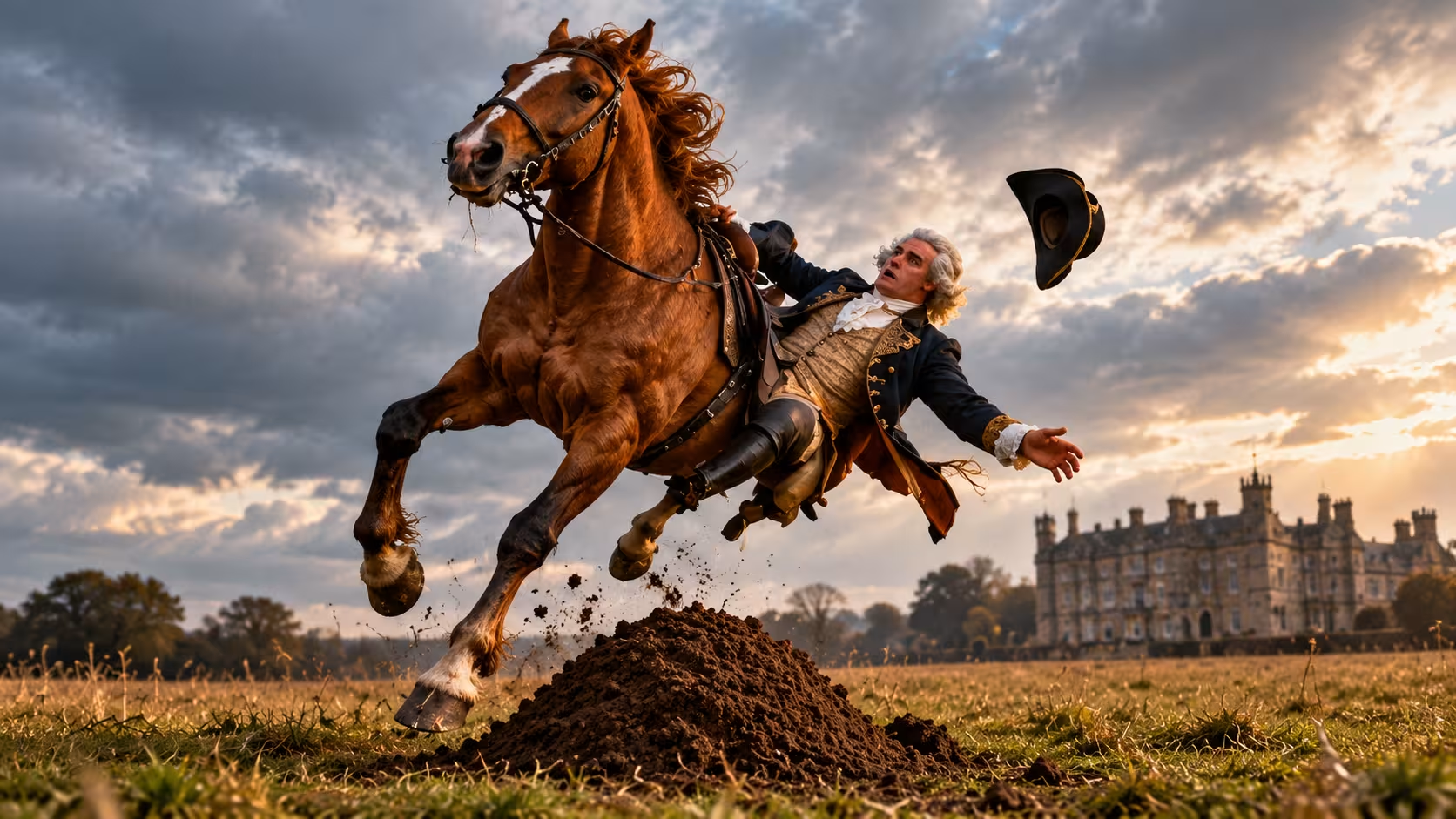
Jacobite supporters delighted in the coincidence, famously toasting the mole as the little gentleman in black velvet.
Whether the horse's ownership followed the precise course described by tradition is another matter.
But history would be considerably duller without its legends.
Where to discover their story: Wallington, near Cambo, now cared for by the National Trust. Tom & Lucy's day at Wallington is a good place to start.
The Herons — The Lady Who Entertained a King
The Heron family held Ford Castle in northern Northumberland for centuries.
Their most enduring story centres on September 1513, when James IV of Scotland invaded England.
Before the Battle of Flodden, the Scottish king occupied Ford Castle, where Lady Elizabeth Heron was in residence.
Her husband was being held prisoner in Scotland.
According to local legend, Lady Heron charmed the king, delayed his campaign and passed valuable information to the English.
Some versions suggest a romantic relationship.

Historians are considerably less convinced, and the chronology makes parts of the tale difficult to accept.
Nevertheless, the story has survived for more than five centuries.
What is certain is that James IV was killed at Flodden on 9 September 1513, in one of the most devastating defeats in Scottish history.
Ford Castle remains a tangible connection to those extraordinary days.
Where to discover their story: Ford village, Ford Castle and the nearby Flodden battlefield.
The Ridleys — From a Border Stronghold to the Reformation
The Ridley family belonged to South Tynedale, with important branches around Willimoteswick, near Bardon Mill.
Like many Border families, their history includes fortified buildings, local feuds and generations of landholding.
But one member achieved a very different kind of notoriety.
Nicholas Ridley was born around 1500 and became one of the leading figures of the English Reformation.
A scholar, theologian and eventually Bishop of London, he helped shape the developing Church of England.
His religious convictions placed him in mortal danger when Mary I restored Catholicism.
In October 1555, Ridley was burned at the stake in Oxford alongside Hugh Latimer.
The two became known as the Oxford Martyrs.
It is an extraordinary journey from the fortified farms of Northumberland to the religious struggles that changed England.
Where to discover their story: Willimoteswick, near Bardon Mill, where the surviving fortified gatehouse recalls the family's medieval home. The site is private property.
The Robsons and Milburns — From the Border to the Football Field
The Robsons and Milburns were two more of North Tynedale's four great riding surnames.
Their ancestors inhabited a landscape where cattle raids, family alliances and armed disputes were part of everyday life.
The Robsons were particularly associated with the upper valley around Falstone, while the Milburns had strong connections with Tarset.
One colourful figure was Muckle Jock Milburn, a famously formidable man remembered in nineteenth-century accounts of Tynedale.
But for many people today, the name Milburn means something else entirely.
Football.
Jackie Milburn, born in Ashington in 1924, became one of Newcastle United's greatest players.
His family connections also lead us to two other famous Northumbrians.
Jack and Bobby Charlton were born in Ashington, and their mother, Cissie, belonged to the Milburn family. Jackie Milburn was her cousin.
Three names familiar from Northumberland's history — Charlton, Milburn and Robson — remain familiar on football terraces.
That does not establish direct descent from the medieval riding families for every famous bearer of those surnames.
But it is a wonderful reminder of how deeply these names have become woven into the region's identity.
The Forsters — A Sister's Daring Rescue
The Forsters were closely associated with Bamburgh for centuries, serving as governors of its great castle and holding estates nearby.
Their fortunes declined dramatically during the seventeenth and eighteenth centuries.
One member, Thomas Forster, became involved in the Jacobite rising of 1715.
Unfortunately, his military career was not particularly successful.
After surrendering at Preston, he was imprisoned in London's Newgate Prison.
What happened next made his sister Dorothy a Northumbrian legend.
The traditional story tells how Dorothy travelled south, helped arrange her brother's escape and enabled him to flee to France.
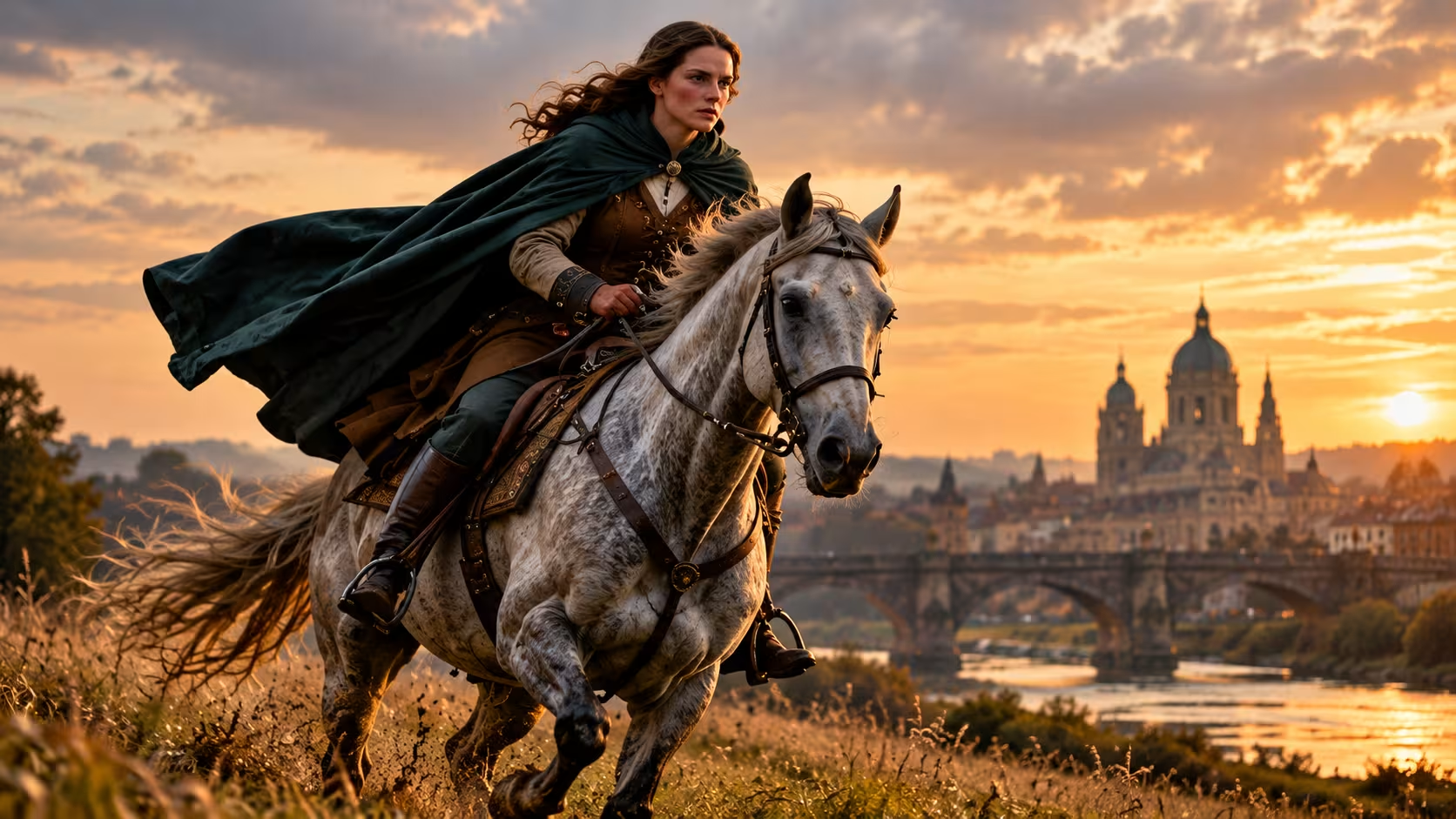
Some accounts embellish the adventure with disguises, secret journeys and even a mock funeral involving a coffin filled with sawdust.
The escape itself is historical fact. Many of the more colourful details belong to folklore.
Still, Dorothy Forster deserves to be remembered.
While the men were busy losing rebellions, she was apparently getting things done.
Where to discover their story: Bamburgh Castle, St Aidan's Church and the surrounding village.
The Radclyffes — The Earl Who Lost Everything
The Radclyffes were a wealthy Catholic family whose Northumberland seat was Dilston, near Corbridge.
James Radclyffe, third Earl of Derwentwater, was born in 1689 and had royal blood: his mother was a daughter of Charles II.
He supported the Jacobite cause and joined the rising of 1715.
The rebellion failed.
At just 26 years old, he was executed on Tower Hill in February 1716.
His estates were confiscated, and the grand house at Dilston was eventually demolished.
Only fragments of the family's former world remain.
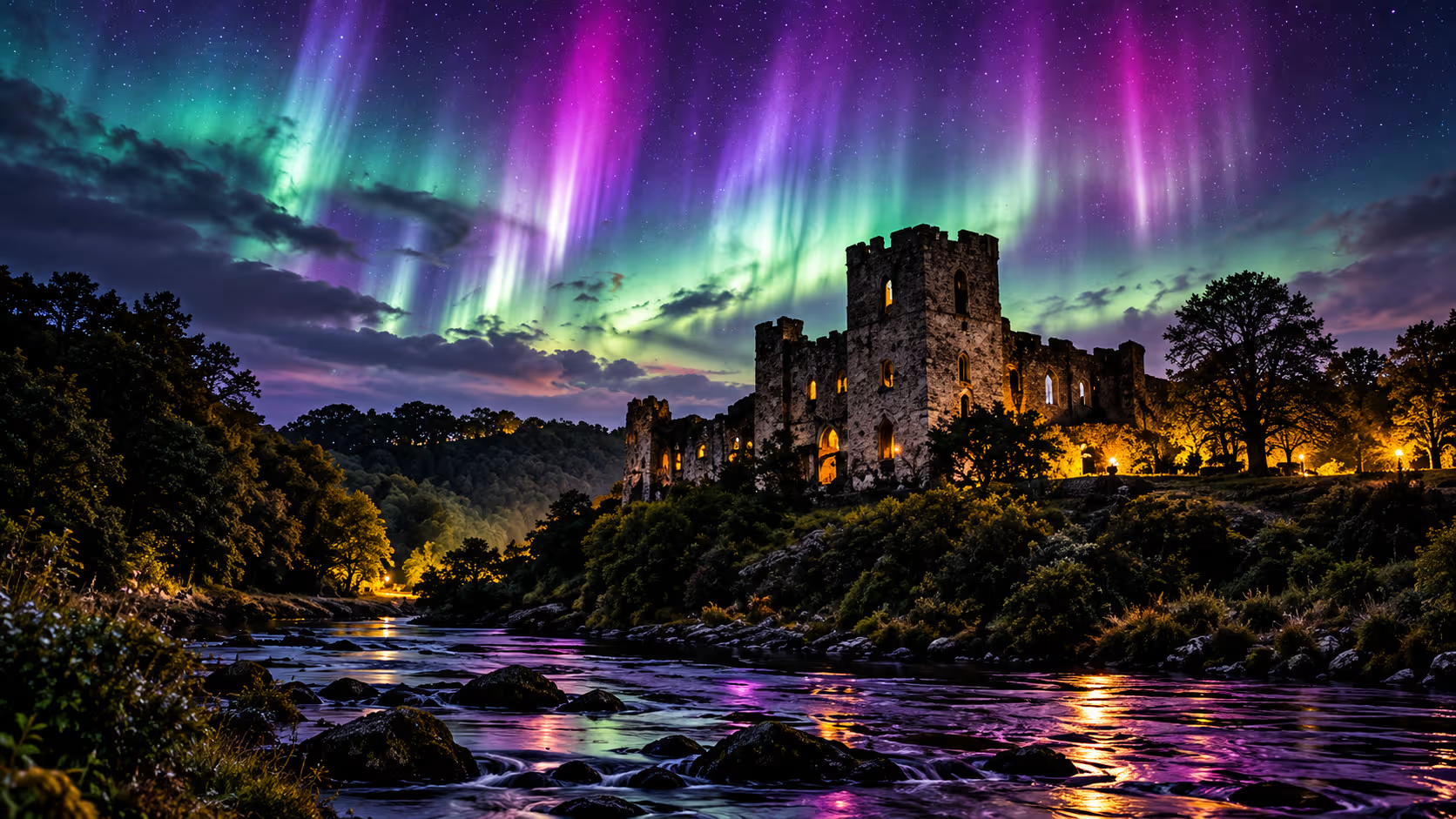
One particularly haunting tradition concerns the Northern Lights.
An unusually brilliant aurora was associated with the time of Derwentwater's execution and became known locally as Lord Derwentwater's Lights.
For generations, the story connected a young nobleman's death with the northern sky.
It is difficult to imagine a more Northumbrian piece of folklore.
Where to discover their story: Dilston Castle and chapel, near Corbridge.
The Greys — Politics, Gardens and a Very Famous Cup of Tea
Of all Northumberland's historic surnames, Grey may be the one most people encounter without realising it.
The Greys of Howick had established themselves on the Northumberland coast by the early fourteenth century.
Their most celebrated member was Charles Grey, second Earl Grey, who served as Prime Minister from 1830 to 1834.
His government passed the Great Reform Act of 1832 and the Slavery Abolition Act of 1833.
His statue still stands high above Newcastle on Grey's Monument.
Yet his name is perhaps better known for something found in kitchen cupboards around the world.
Earl Grey tea.
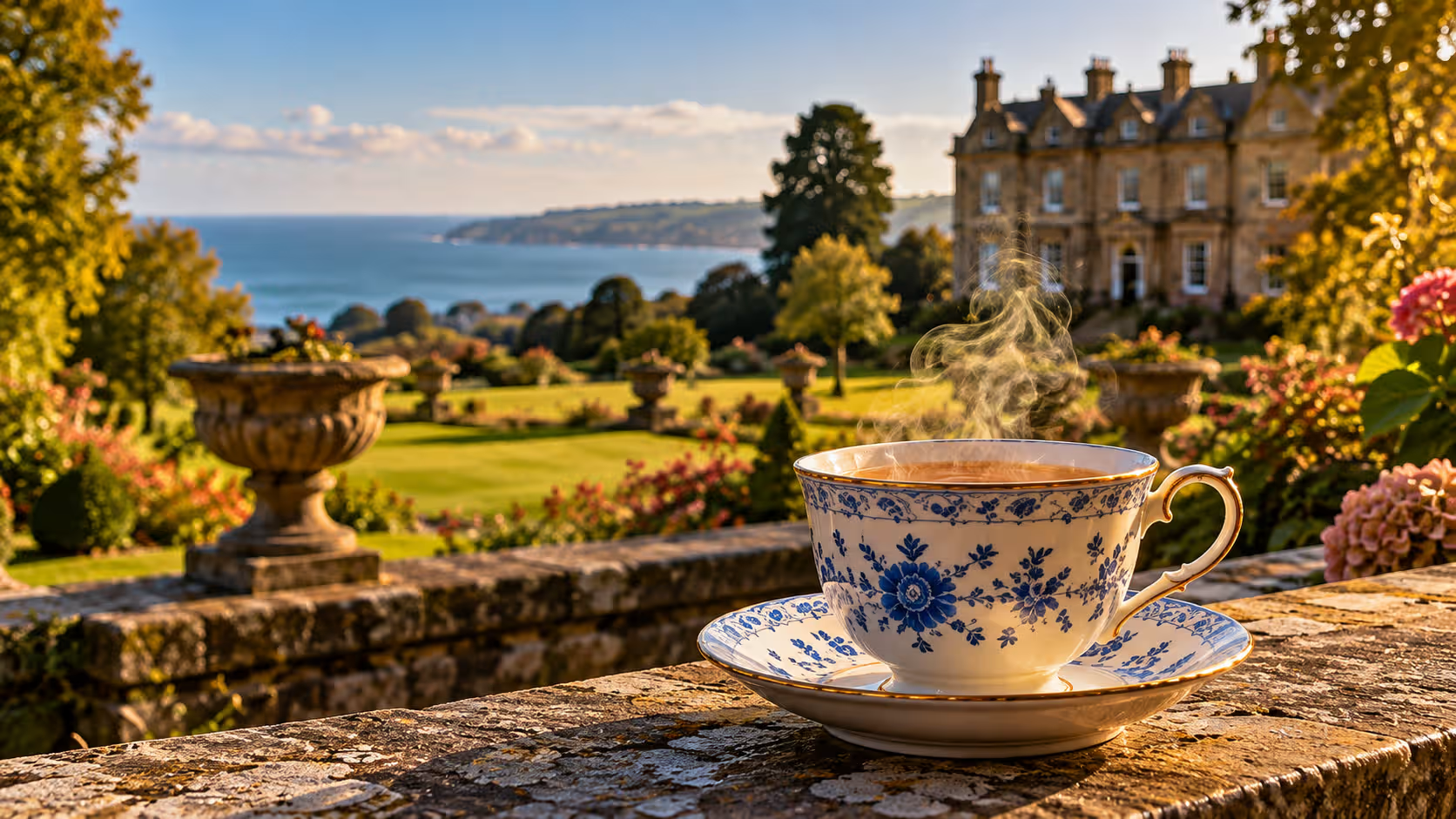
The precise origins of the blend are disputed, but family tradition connects the bergamot-flavoured tea with Howick and the Grey household.
One story suggests the blend was developed to suit the local water.
Whether or not that is true, the association has endured.
At Howick Hall Gardens, visitors can enjoy the gardens and stop for tea in a place with a genuine connection to the family behind the name.
I suspect Earl Grey would be rather pleased.
Or possibly bewildered that his parliamentary achievements are so often overshadowed by a teapot.
Where to discover their story: Howick Hall Gardens and Arboretum, close to the coast between Alnmouth and Craster.
The Collingwoods — Northumberland's Admiral
Not every distinguished Northumberland family made its reputation through castles and Border warfare.
Cuthbert Collingwood was born in Newcastle in 1748 and became one of Britain's greatest naval commanders.
At the Battle of Trafalgar in 1805, he commanded HMS Royal Sovereign and played a decisive role in the British victory.
After Nelson was fatally wounded, Collingwood assumed command.
He spent much of his adult life at sea and had a deep affection for Northumberland.
He is remembered for planting acorns in the county's hedgerows, hoping that the trees might one day provide timber for the Royal Navy.
There is something rather touching about that.
A man who spent so much of his life away from home planting trees for a future he would never see.
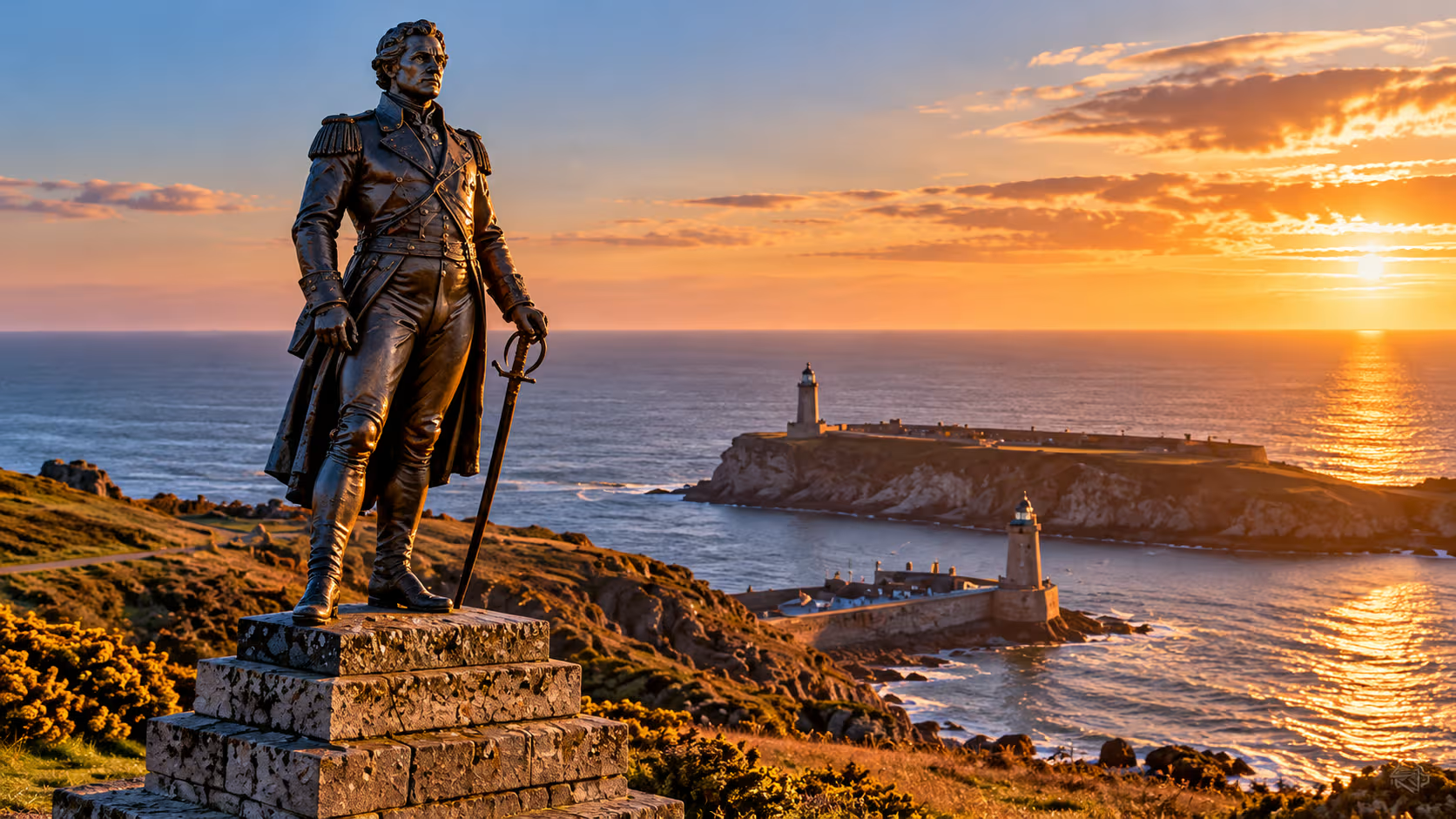
His imposing monument at Tynemouth overlooks the mouth of the River Tyne.
A fitting place to remember a sailor.
Other Names Written Across Northumberland
There are many more families whose histories deserve attention.
The Delavals left their name on Seaton Delaval Hall, one of the county's great architectural treasures, while later generations became notorious for extravagant entertainments and elaborate practical jokes.
The Trevelyans are closely associated with Wallington, which eventually passed into the care of the National Trust.
The Swinburnes of Capheaton belonged to Northumberland's old landed families and had connections with the poet Algernon Charles Swinburne.
The Widdringtons played their part in the Jacobite rising of 1715, while the Ogles gave their name to the village and castle near Ponteland.
Each family offers another small window into Northumberland's past.
And each deserves a story of its own.
A County That Remembers Its Names
What strikes me most about these families is not their wealth, their titles or even their occasional enthusiasm for rebellion.
It is how much of their world remains visible.
You can walk beneath the walls of Alnwick and Warkworth, explore the woods around Cragside, stand among the ruins at Dilston or look out from the coast near Howick.
The names appear on villages, estates, monuments, churches and old maps.
Some families retained their lands for centuries. Others lost everything through war, debt, political misjudgement or simply choosing the wrong king.
And the Border riding families, once feared across the valleys, left surnames that are still heard every day.
Tom was right to ask for this story.
Because once you begin recognising the names, Northumberland starts to look a little different.
A castle becomes a family home.
A ruined tower becomes the scene of an old feud.
A quiet valley becomes a landscape of riders, watchmen and cattle moving through the darkness.
And an ordinary surname becomes a thread connecting the present to a surprisingly turbulent past.
Northumberland has always been good at keeping its stories. Sometimes you simply need to know which names to look for.
Peter
The Percy family’s home for over 700 years and Hogwarts in the first two Harry Potter films, with glorious Italianate State Rooms. Open late March to October.
View in Listed →A dramatic medieval castle overlooking the village and the River Coquet, with a well-preserved keep, dog-friendly grounds, and a scenic riverside walk to the Hermitage.
View in Listed →A remarkable Victorian house, six-mile carriage drive, woodland walks, playground and proper adventures — Cragside is one of our favourite Northumberland days out.
View in Listed →The dramatic clifftop castle at the heart of the village, with state rooms, centuries of history and a beach right on its doorstep.
View in Listed →The ancestral home of the Earl Grey family, with extensive gardens, woodland walks and an excellent tea room serving - fittingly - a proper pot of Earl Grey.
View in Listed →England's oldest purpose-built prison, with a glass lift down to the dungeon and hands-on exhibits on crime and punishment - a fun, quick stop rather than a full afternoon out.
View in Listed →The Border Reivers: A History
Lucy
The history behind Preston Tower's thick walls — three centuries of border raiding, the families who lived by it, and how the word 'blackmail' came to be.
Read the story →Wallington — The Place We Weren't Going To Visit
Lucy
A quick look at Wallington turned into a whole afternoon — wind, wandering, an accidental garden discovery, cake, and Tom's six-year quest for a fleece Lucy accidentally gave away.
Read the story →Cragside, This Time With Sunshine
Lucy
Tom's Cragside was rain and solitude. Lucy's has sunshine, Flynn, the adventure play area, Blueberry Bakewell slices and the house itself.
Read the story →The Castle We Thought We Knew
Lucy
After years of driving past, we finally slowed down to properly explore Bamburgh Castle — a beach walk with Meg, breakfast at The Lord Crewe, and centuries of history inside the walls.
Read the story →The Sunday That Refused to Go to Plan
Lucy
A quiet riverside walk in Alnwick became a detour to Charlton Hall, hours in Alnwick Castle’s State Rooms and a hunt for Sunday lunch that ended in a warm corner with Meg asleep beside us.
Read the story →
Join the conversation
Got somewhere we should try? Tell Tom & Lucy below.