Our Time at Cragside
Tom has already written about Cragside.
His version involved rain, Meg, empty woodland and the sort of solitary wandering he considers a perfectly sensible way to spend several hours.
Needless to say, I wanted no part in that.
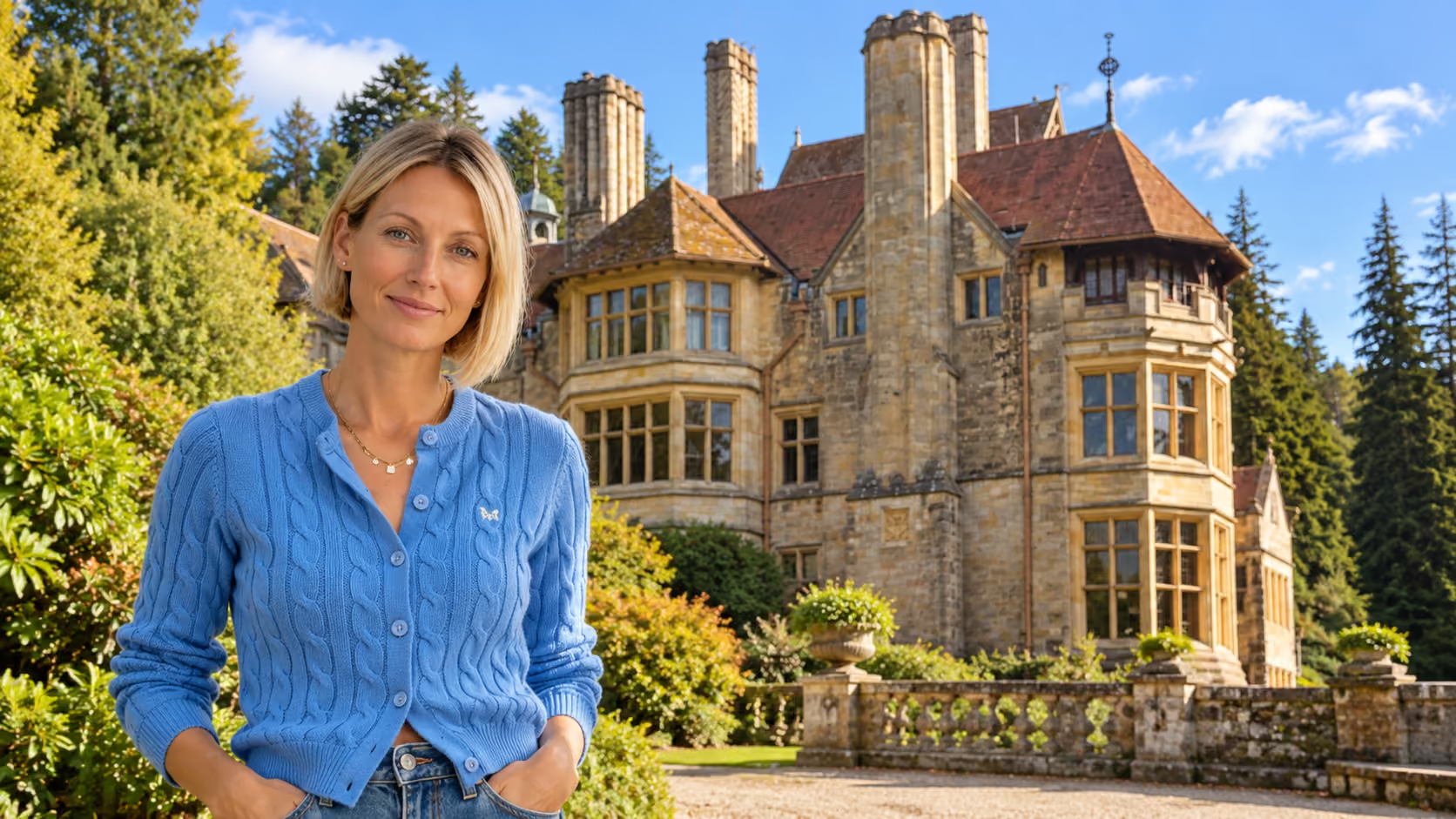
This time the weather gods had apparently read his post and decided to make amends. Deep blue skies, fluffy white clouds and one of those glorious early-autumn days where summer seems to come back for one last weekend.
No coats. Just us, Flynn, Meg and an entire Saturday ahead.
The 80/20 Rule
Tom always starts talking about the Pareto Principle when we arrive at Cragside.
Apparently 80% of the visitors will be in 20% of the estate, which normally means he immediately starts plotting how we can avoid that particular 20%.
Not today.
I was in charge.
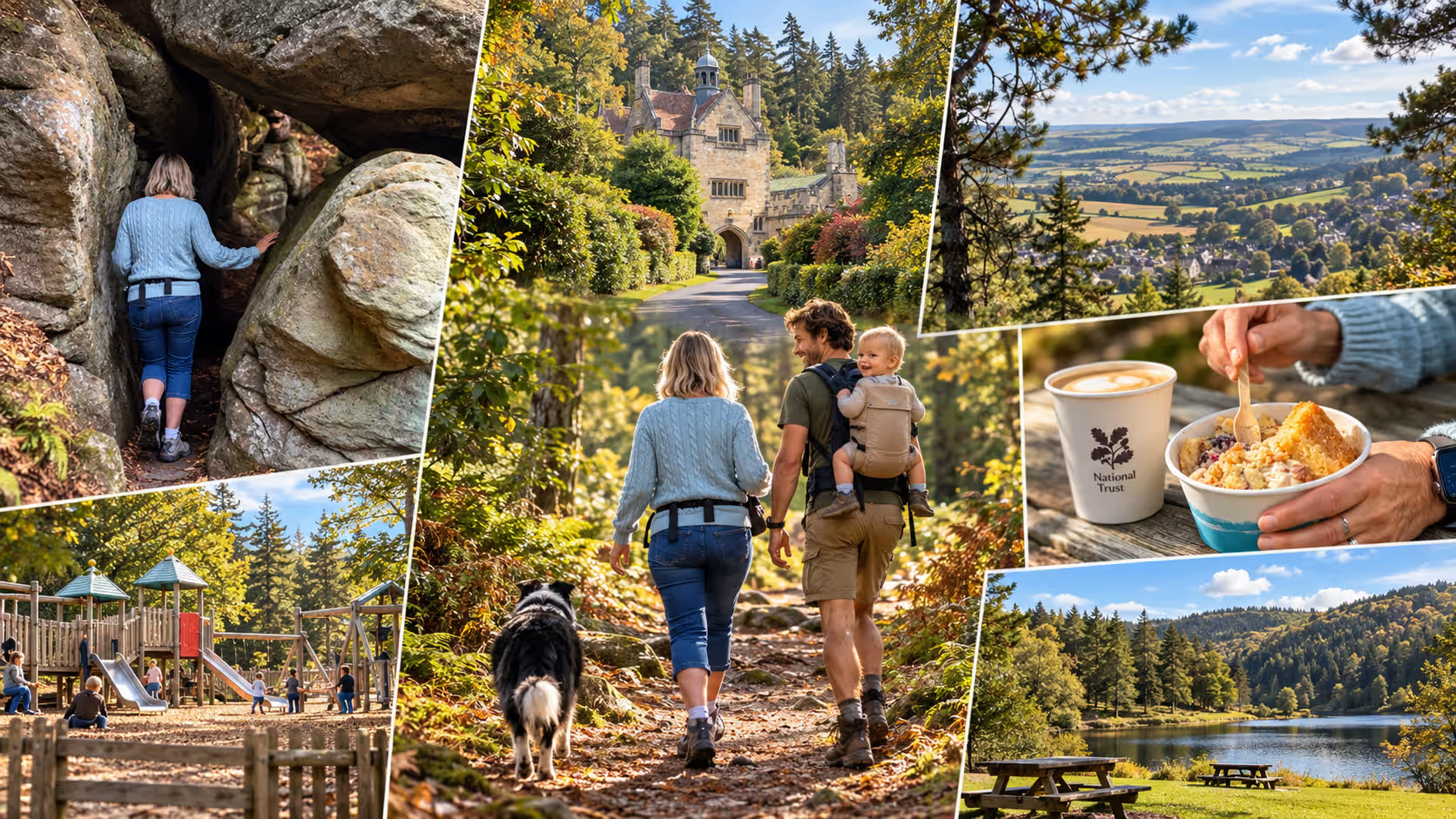
We started at the Visitor Centre, where coffee and a bacon and egg roll can rescue anyone who has made the tactical error of leaving home without breakfast. There are toilets and baby-changing facilities here too, making it a sensible place to regroup before setting off.
Then we joined Carriage Drive and headed towards the adventure playground.
Six Miles of Cragside
Carriage Drive is a roughly six-mile loop through the estate, connecting many of Cragside’s different areas.
You can drive it — and there are car parks dotted around the route — but with Meg along we prefer to walk sections whenever we can.
It’s particularly useful with a pushchair or children on bikes because you’re on a proper surfaced road rather than a woodland trail. Cars use it too, though, with a 15mph limit, so it isn’t somewhere we’d simply let children wander unattended.
As a way of seeing the estate, though, it’s lovely.
And on a day like this, with sunlight catching the first autumn colour in the trees, there really wasn’t much incentive to hurry.
The Important Bit: Cake
Eventually we reached the adventure playground.
It’s big enough for children to properly burn off some energy, with plenty of space for climbing, swinging and generally doing all those things which hopefully result in a quieter journey home.
There’s usually a nice mixture of families around too, so it feels relaxed rather than frantic.
And conveniently, Crozier’s Kiosk is right beside it.
Tom discovered the Blueberry Bakewell slice.
Then he discovered that you could put two scoops of salted caramel ice cream on top of it.
I suspect this may now be the real reason he likes Cragside.
What he didn’t know was that I’d quietly bought another couple of slices to take home.
Whether he got his later depended entirely upon the completion of several outstanding Blue Jobs.
Marriage is about compromise.
Tom’s Shortcut
Leaving the playground, we headed back towards the house.
There are perfectly sensible ways of doing this.
Naturally, Tom chose another one.
He likes to introduce what he calls a little curve ball into our walks to “keep things interesting”.
Which sounds charming until you find yourself negotiating rocks, tree roots and narrow gaps with a dog, bags and a one-year-old strapped to you.
At one point I found myself scrambling down the crag wondering precisely when I’d agreed to any of this.
Two Blueberry Bakewell slices for me, then.
A House That Changed the World
Eventually we reached Cragside House itself.
It’s difficult to overstate just how extraordinary this place must have seemed in its Victorian heyday.
Cragside was created by Lord William Armstrong and his wife Margaret, growing from a relatively modest country retreat into the sprawling house we see today. Armstrong was an engineer and inventor, and Cragside became almost a showcase for what new technology could do.
Most famously, it became the first house in the world to be lit by hydroelectricity, using water from the estate.
But that’s only part of it.
The house incorporated hydraulic machinery, early domestic technology and innovations that must have made visiting Cragside feel rather like being invited into the future.
At the moment restoration work and scaffolding inevitably detract a little from that first dramatic view, but once you’re inside, none of that really matters.
Going Inside
Meg couldn’t join us in the house, so after our walk we made sure she was safely settled before Tom, Flynn and I went inside.
We’re normally guilty of avoiding the house because — Pareto Principle again — that’s where everybody else tends to be.
This time I’m glad we didn’t.
Walking through the rooms, we kept doing what we always do in historic houses: forgetting about dates and furniture for a moment and trying to imagine the people actually living there.
Morning fires. Dinner being prepared. Guests arriving. Armstrong tinkering with something somewhere while everybody else presumably wondered what he’d electrify next.
One of the guides also told us a fascinating final chapter in Cragside’s story.
After the death of the 2nd Baron Armstrong, the estate eventually passed to the National Trust in 1977, transferred by HM Treasury in lieu of death duties.
Which means this extraordinary Victorian experiment ultimately became somewhere all of us could wander around on a sunny Saturday afternoon.
There’s something rather nice about that.
The Heather & Sand Verdict
Cragside is one of our favourite National Trust days out in Northumberland because it doesn’t have to be the same place twice.
Come for Armstrong and the remarkable house. Come with children and spend half the day around the playground. Drive the Carriage Drive. Walk through woodland. Find the lakes. Take the dog. Find one of Tom’s mysterious paths and immediately regret taking the dog.
Or simply find a quiet spot, sit down and let the other 80% go somewhere else.
Tom’s rainy Cragside was beautiful.
But I’m keeping the sunny one.
And the second slice of Blueberry Bakewell.
Read the full story from our visit: Cragside, This Time With Sunshine