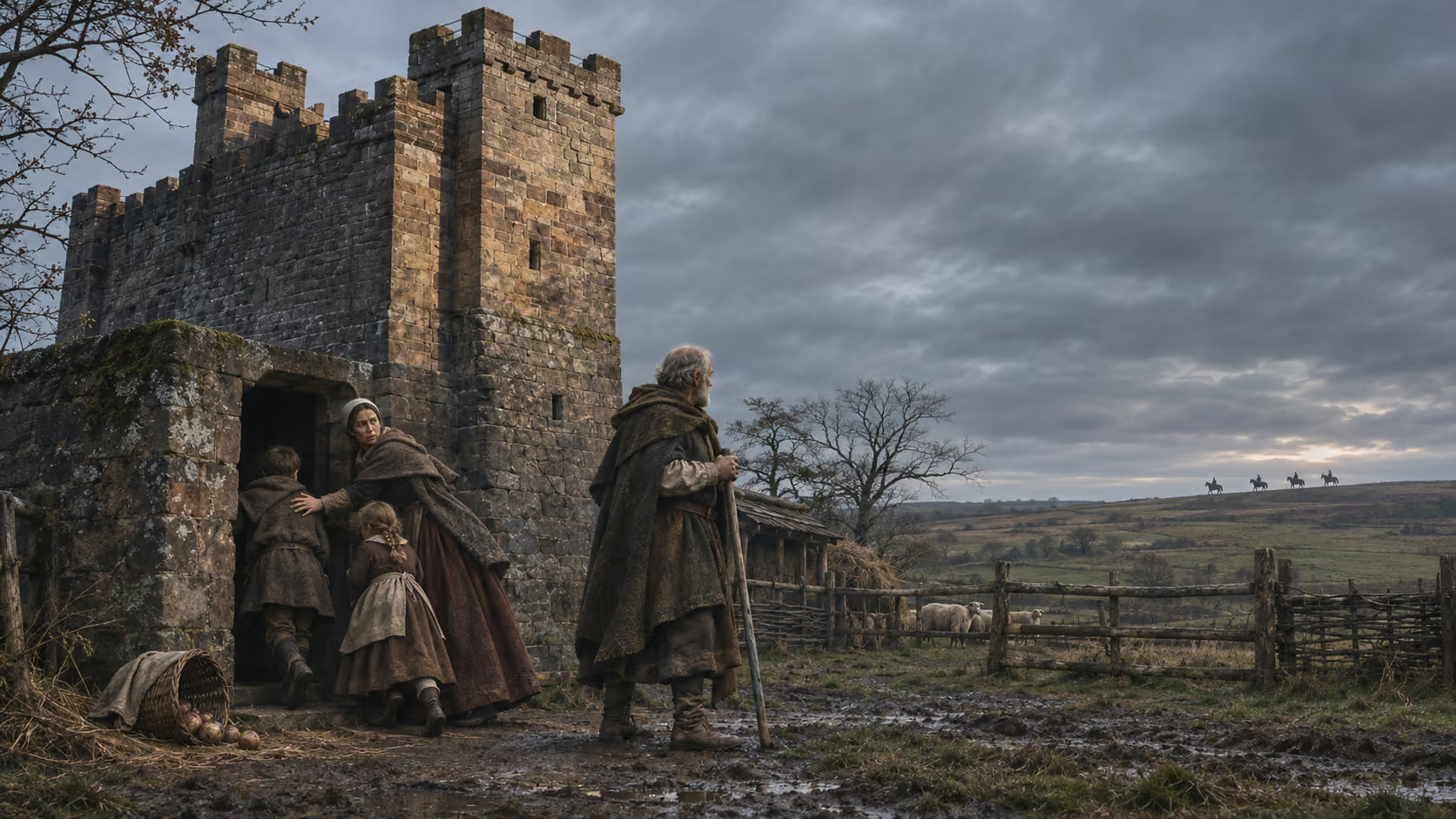
What sort of neighbours make you build a house like this? Stand beside the wall at Preston Tower and put your hand on the stone. Then look at how little of that wall the builder was willing to give over to a window. You can learn a fair bit about the old Border before you’ve climbed a single stair.
Who were the Border Reivers?
The Border Reivers were raiders from both sides of the Anglo-Scottish frontier. By the sixteenth century, families such as the Armstrongs, Elliots, Charltons and Robsons had made names for themselves in a country where a feud could matter as much as which side of the Border you lived on. Men rode out to take cattle and horses, settle scores and sometimes seize prisoners. A neighbour in the next valley could have as much cause to worry as anyone across the frontier.
A stolen herd meant a great deal more than an empty field. Livestock was wealth you could walk away with. For the household left behind, it might mean losing the animals it had counted on to get through winter. That’s worth remembering when the old ballads get to the good bit.
Who kept order on the Border?
England and Scotland each divided their side of the frontier into East, Middle and West Marches. Wardens were supposed to keep order and settle complaints with their counterparts. At meetings held under truce, there was a way to bring grievances across the Border. How well it worked depended on the people in charge, some of whom had interests of their own.
In 1596, English men seized the Scottish reiver William Armstrong, known as Kinmont Willie, after a truce meeting and took him to Carlisle Castle. Walter Scott of Buccleuch led the party that freed him. The ballad makes a fine adventure of it. English Heritage also has the English warden’s account, which puts some of the rescuers’ luck down to a storm and guards taking shelter. I’d read both. The same night sounds quite different depending on who’s telling it.
What’s the difference between a pele tower and a bastle?
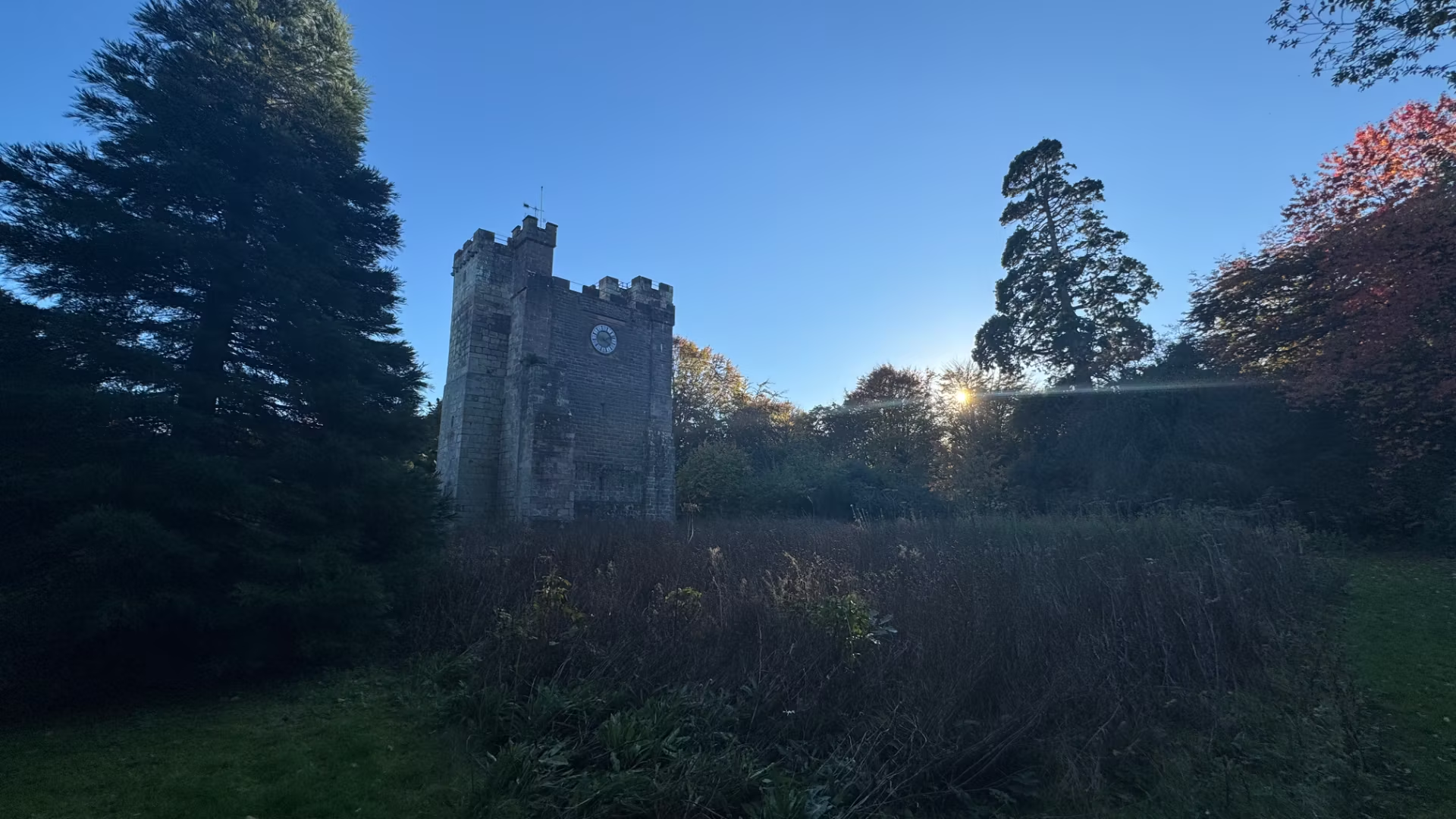
A pele tower was a fortified tower house. Preston is a good place to get a feel for one. Its late-medieval builders gave it walls about seven feet thick. Look at the depth of the window openings and how the rooms are stacked. A household could live upstairs and put a great deal of stone between itself and whoever came calling.
A bastle was a fortified farmhouse. In a typical bastle, the family lived above a secure ground floor where livestock could be brought in. Think about that arrangement for a moment. If somebody came for your cattle, the safest place for them might be directly beneath your bed.
Where to see the Border’s fortified homes
- Preston Tower, near Chathill. Start here if you want to see the inside of a pele tower. Look at the slit windows from both sides if you can. From outside you see how little of an opening there is. From inside you see how much wall there is to get through. Check access before setting off. Preston Tower visitor information.
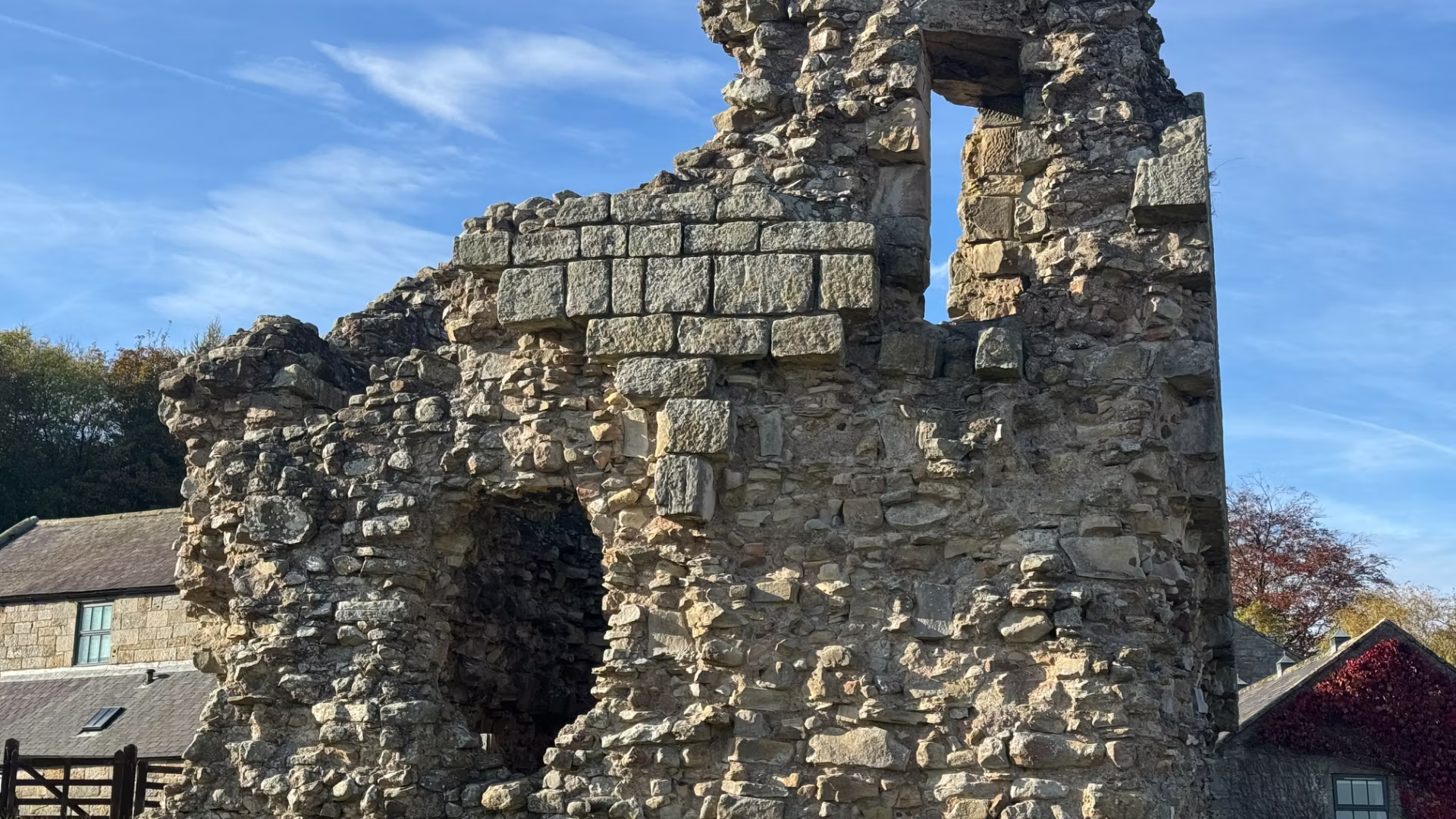
- Tosson Tower, near Rothbury. The surviving stonework at Great Tosson gives you a second tower to compare with Preston. Look at how it sits in Coquetdale and what you can see of the valley from nearby. Northumberland National Park’s guide to Tosson Tower and Woodhouses Bastle.
- Woodhouses Bastle, Coquetdale. Look for the lower storey and picture the farmhouse in use, with people and animals under one roof. The National Park’s guide above covers both Coquetdale sites.
Next time you pass an old tower, give the windows a second look. There’s a story in how little light someone was prepared to live with for the sake of a good night’s sleep.
Read Peter’s guide to Northumberland’s family names.
Sources and further reading
A roofless medieval pele tower at Great Tosson, caught in autumn sun on our way to Simonside. A short, rewarding stop for Border history and weathered stone.
View in Listed →A late-medieval pele tower near Chathill, with seven-foot-thick walls, a tight stone stair and a surprisingly peaceful view over the fields.
View in Listed →The Border Reivers: A History
Lucy
The history behind Preston Tower's thick walls — three centuries of border raiding, the families who lived by it, and how the word 'blackmail' came to be.
Read the story →A Tower Built for Waiting
Tom & Lucy
A visit to Preston Tower, a 14th-century pele tower built for a family waiting out the worst of the Anglo-Scottish Border — and what its seven-foot-thick walls were really for.
Read the story →
Join the conversation
Got somewhere we should try? Tell Tom & Lucy below.