If you leave the coast behind and drive west towards Alnwick, then carry on towards Rothbury, you can be at Cragside in around 45 minutes.
It’s a lovely drive in itself.
Coming from the north, you’ll probably catch sight of Alnwick Castle sitting proudly above the town before passing through Alnwick and heading west. From there the road opens out, with long views across a very different Northumberland to the one we usually write about.
No beaches. No dunes. No fishing boats.
Just hills, trees and miles of sky.
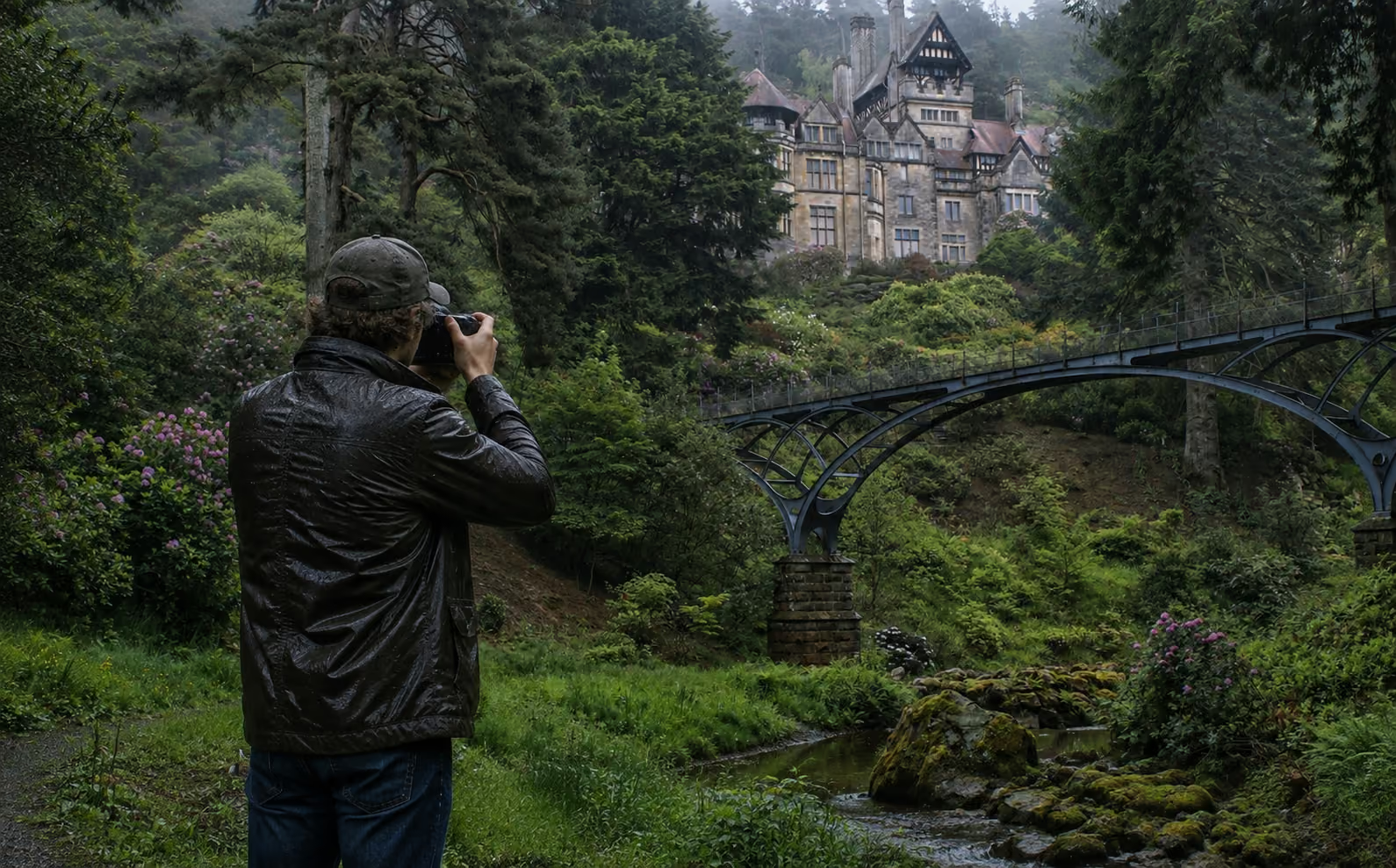
And then, as you arrive at Cragside and look across Tumbleton Lake towards the estate, there’s a reasonable chance somebody in the car will simply say:
Oh wow.
We make this run quite often, particularly when the weather isn't quite sure what it's doing. Cragside offers miles of good walking for Meg, and one of the things we like most about it is how quickly you can escape everyone else.
The main car park can look alarmingly busy when you first arrive, particularly at weekends, but don't let that put you off. There are several other car parks dotted around the estate and along the six-mile Carriage Drive.
Most visitors naturally gravitate towards the house, tea room and play area. Walk for ten or fifteen minutes in the opposite direction and Cragside can suddenly become remarkably quiet.
We've visited on busy weekends and spent long stretches of the walk encountering only a handful of other people.
A Victorian house from the future
Cragside began rather modestly in 1863, when William and Margaret Armstrong built a small sporting lodge on the rocky moorland outside Rothbury.
What followed was anything but modest.
Over the next three decades the house and surrounding landscape grew into an extraordinary Victorian experiment. Armstrong was an engineer, inventor and industrialist, and Cragside became somewhere he could put his ideas into practice.
The streams were dammed to create lakes. Water was channelled around the estate and used to power machinery, hydraulics and eventually electricity.
In 1878, electric arc lamps were installed in the house. Two years later, Cragside's library became the first domestic installation of Joseph Swan's newly invented incandescent lamps.
Cragside became the first home in the world to be lit using hydroelectricity.
Central heating, electric lighting, gravity-fed plumbing, a hydraulic lift and even a water-powered roasting spit followed.
It is sometimes described as Britain's original smart home.
Which isn't bad for a house begun when Queen Victoria had another thirty-eight years left on the throne.
But perhaps the cleverest thing Armstrong created wasn't inside the house at all.
It was the landscape.
The lakes, dams, bridges, paths and enormous trees surrounding Cragside weren't simply decoration. Much of the landscape was part garden, part engineering project.
More than 160 years later, we get to walk through it.
The Cragside we love
We love Cragside at any time of year.
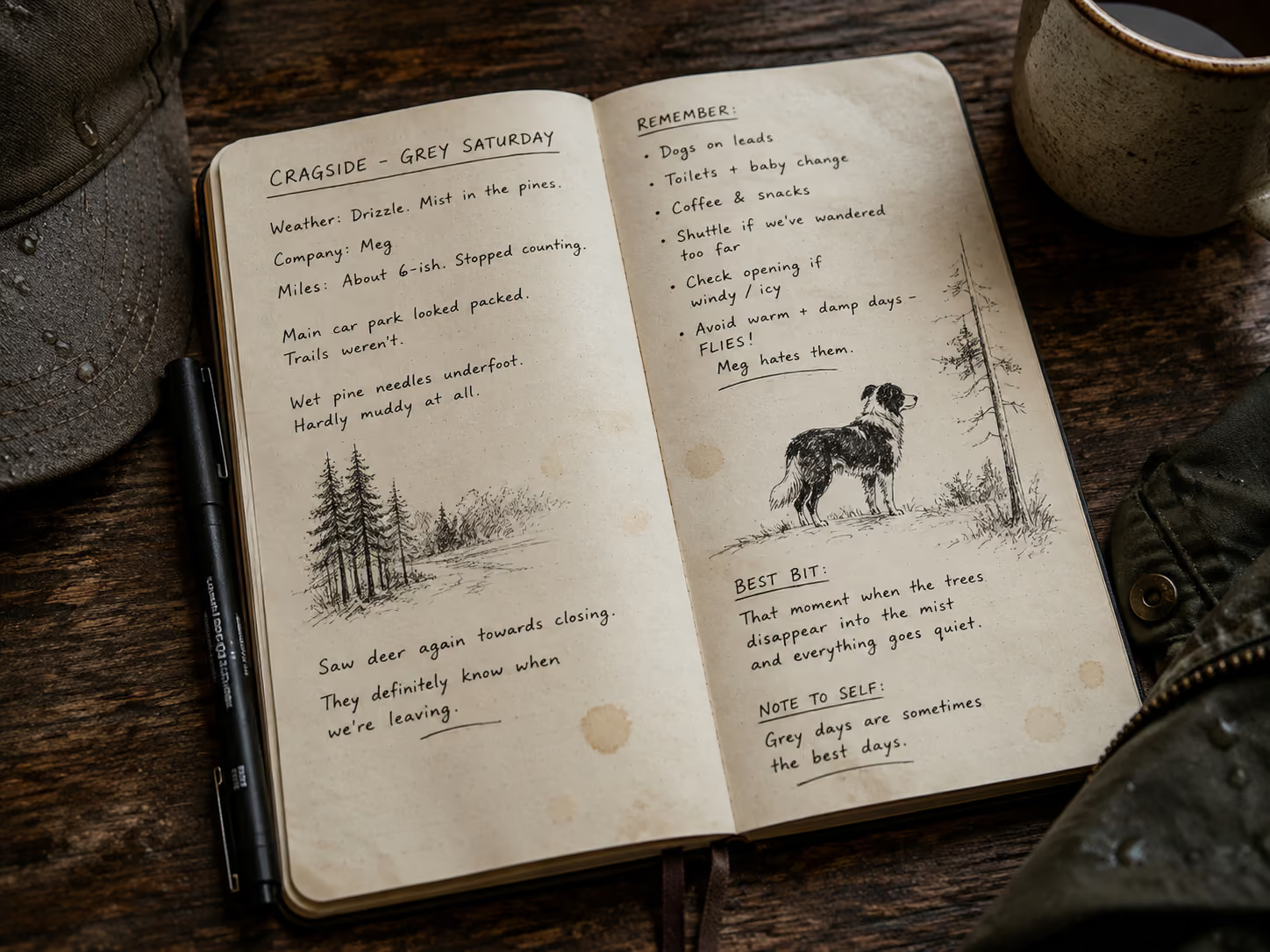
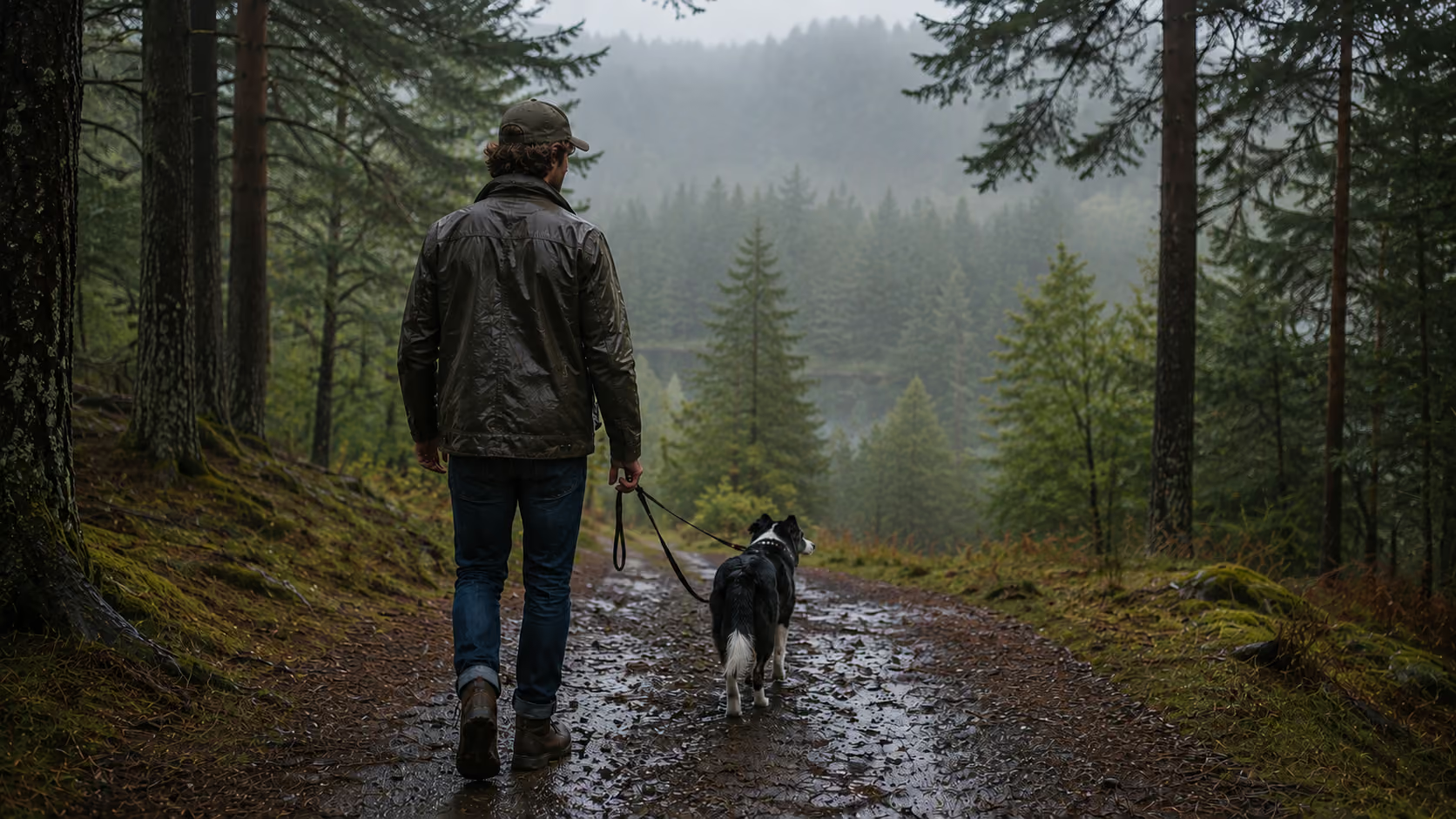
Autumn is spectacular and on a bright summer day the lakes can look beautiful, but I have a particular soft spot for the less promising days.
Grey sky.
A little drizzle.
Mist hanging amongst the pine trees.
Water dripping from the branches and that wonderful quiet you get beneath a canopy of enormous trees.
On those days Cragside feels almost made for walking.
Many of the main tracks have a base of stone, gravel and decades of fallen pine needles, so even after rain there are plenty of routes where you aren't immediately ankle-deep in mud. Some of the smaller paths can still become wet and slippery, though, so proper footwear is worth bringing if you're planning to explore.
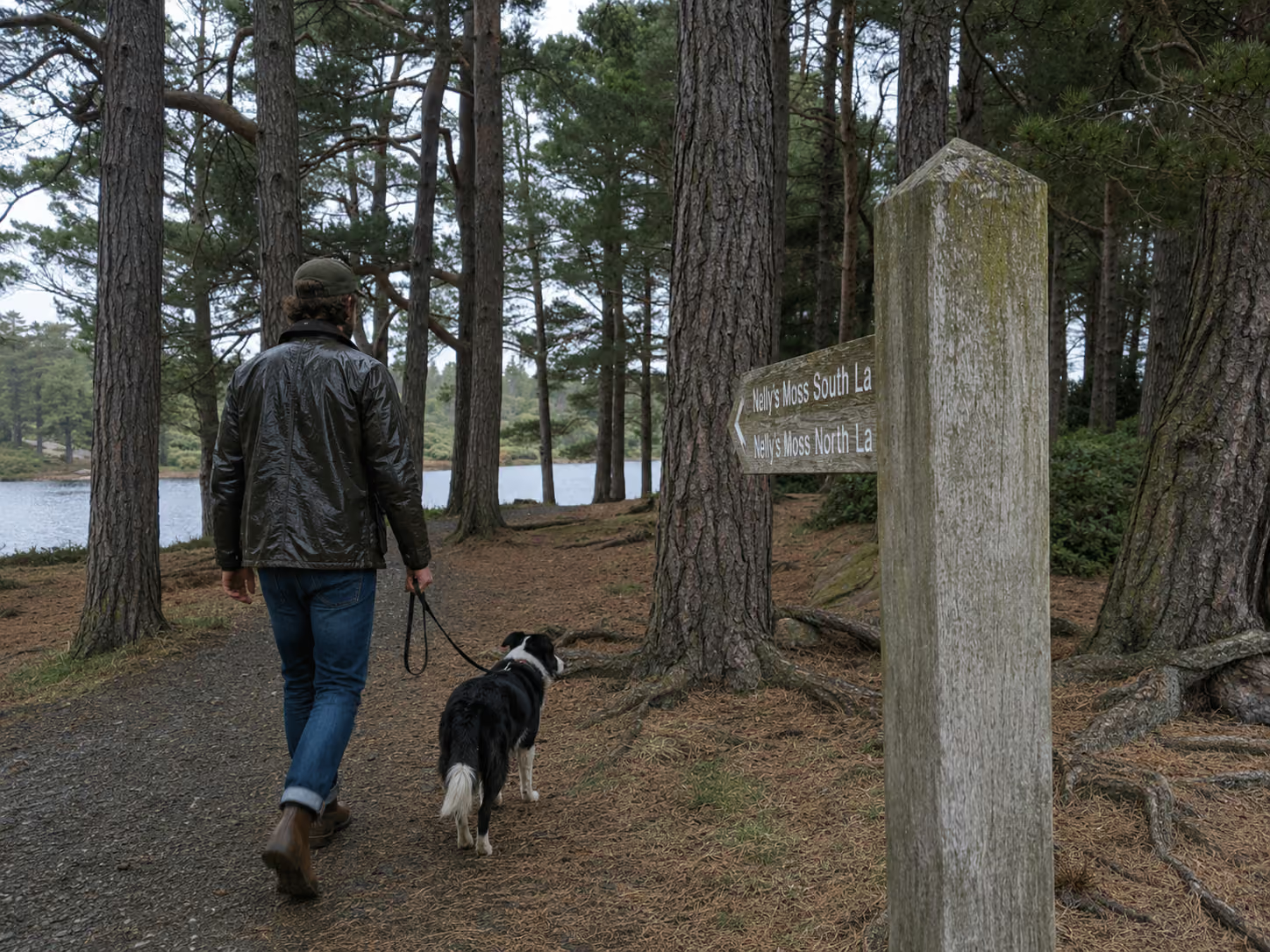
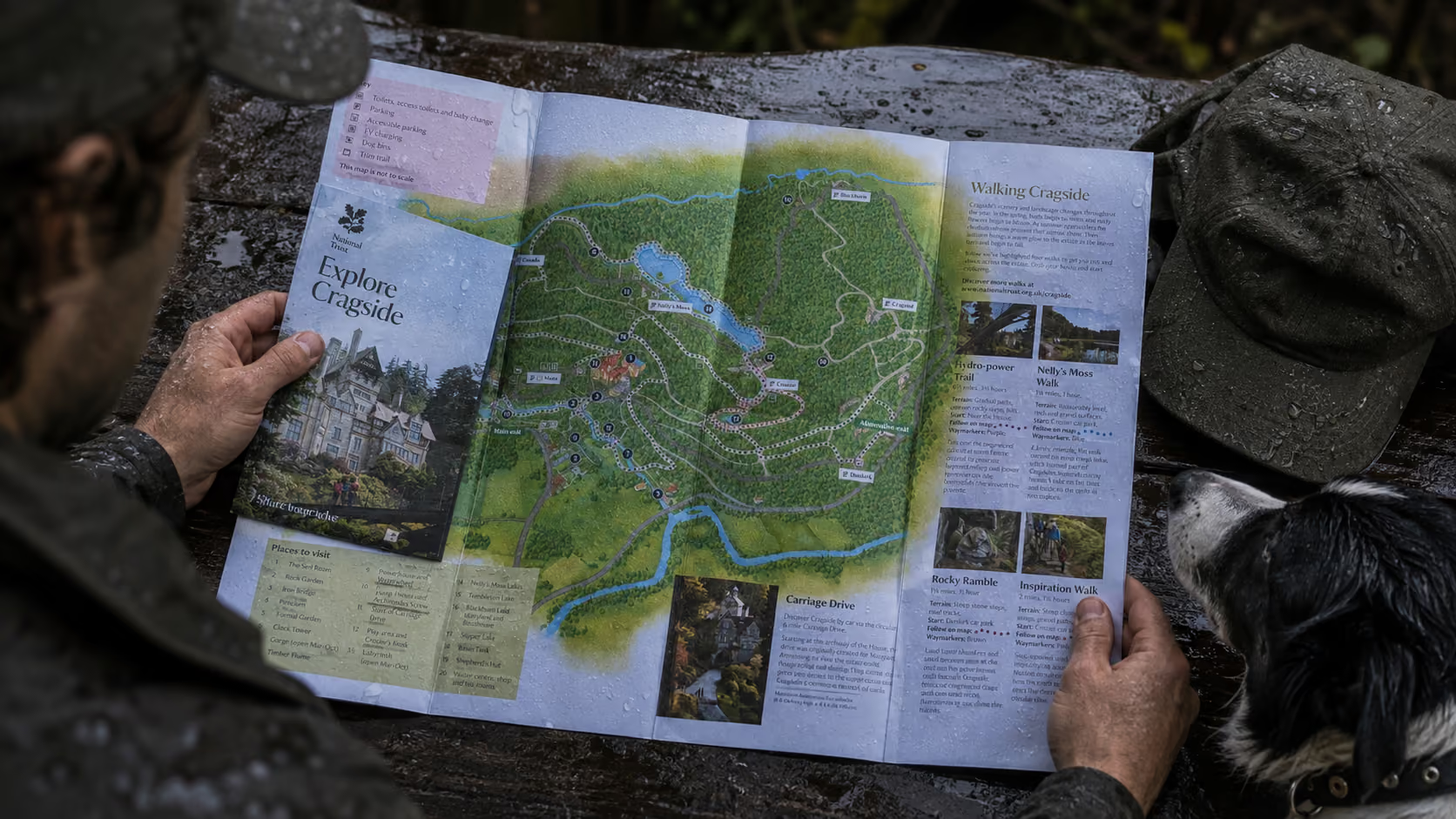
There are marked walks all over the estate, ranging from fairly short routes to the seven-mile Hydro-power Trail.
Or you can simply wander.
That's usually our approach.
Pick a path.
See where it goes.
Meg doesn't seem particularly concerned about the destination.
The six-mile option
If you've arrived wearing suspiciously clean white trainers, there is another possibility.
The Carriage Drive is a six-mile, single-track road looping through the upper estate. Most people experience it by car, stopping at the various car parks along the way, but sections can also make for very easy walking.
You do share the road with vehicles, so you need to keep an eye and ear out, but traffic moves slowly around the estate.
For families, it can also provide an easier option than some of the steeper woodland trails. A buggy can manage many of the more accessible areas with care, although Cragside is a steep and rugged place in parts and certainly isn't flat.
There is also a small free shuttle bus running between several of the main areas during much of the season, and dogs are welcome aboard.
Useful knowledge when you've confidently announced "We'll just walk a little further" about two hours earlier.
When everyone else has gone
Stay later in the day and Cragside changes again.
As visitors begin drifting back towards their cars, the estate seems to become quieter by the minute.
This is often when we start watching for deer.
We've seen them moving through the quieter parts of the estate towards the end of the day, occasionally standing amongst the trees watching us with considerably more suspicion than Meg would like.
It sometimes feels as though they know the arrangement.
Humans out. Deer back in.
Fair enough.
It is their place after all.
And somewhere, on a cold, damp Saturday afternoon when sensible people are drinking coffee beside the fire, there's a reasonable chance you'll find Me and Meg disappearing along one of Cragside's woodland trails.
Probably in the drizzle.
And perfectly happy about it.
Tom's Notes
- Where: Cragside, near Rothbury, Northumberland
- Best for: Woodland walks, lakes, history, families and dogs
- Carriage Drive: Approximately 6 miles around the estate
- Parking: Main parking plus several smaller car parks around the estate
- Dogs: Very welcome outdoors, but must remain on a lead
- Food: Tea room plus seasonal drinks and snack options around the estate
- Baby changing: Available at several toilet locations
- Buggy: Possible in accessible areas and along easier routes, but much of Cragside is steep and uneven
- Shuttle bus: Free service connects several key areas during much of the season; dogs are welcome
- Cost: A relatively expensive day without National Trust membership, particularly for a family
- Worth knowing: After warm, wet weather the woodland can become very fly-heavy. Meg definitely does not recommend this particular feature.
Before setting off
In very high winds, icy conditions or severe weather, check Cragside's current opening information before making the journey. Woodland paths and parts of the estate may occasionally need to close for safety or conservation.
And if you're visiting on a Bank Holiday mainly for the house, tea room or play area, we'd arrive early.
If you're coming simply to walk?
Don't worry too much about the cars in the main car park. Most of those people aren't going where we're going.