Tom is developing a hero.
Given Northumberland’s supply of extraordinary characters, this was probably inevitable. I’m rather pleased he’s chosen someone with a proper story, although Henry Percy does set a worrying precedent for anyone inclined to confuse stubbornness with sound judgement.
Look beyond the nickname and there’s a compelling reason to get to know him. His story connects Northumberland’s castles and border country to a struggle for the English crown. It also makes those familiar stone walls feel rather less peaceful.
First, Untangling the Henrys
The Percy family had a considerable attachment to the name Henry. For anyone trying to follow their history, this was unhelpful.
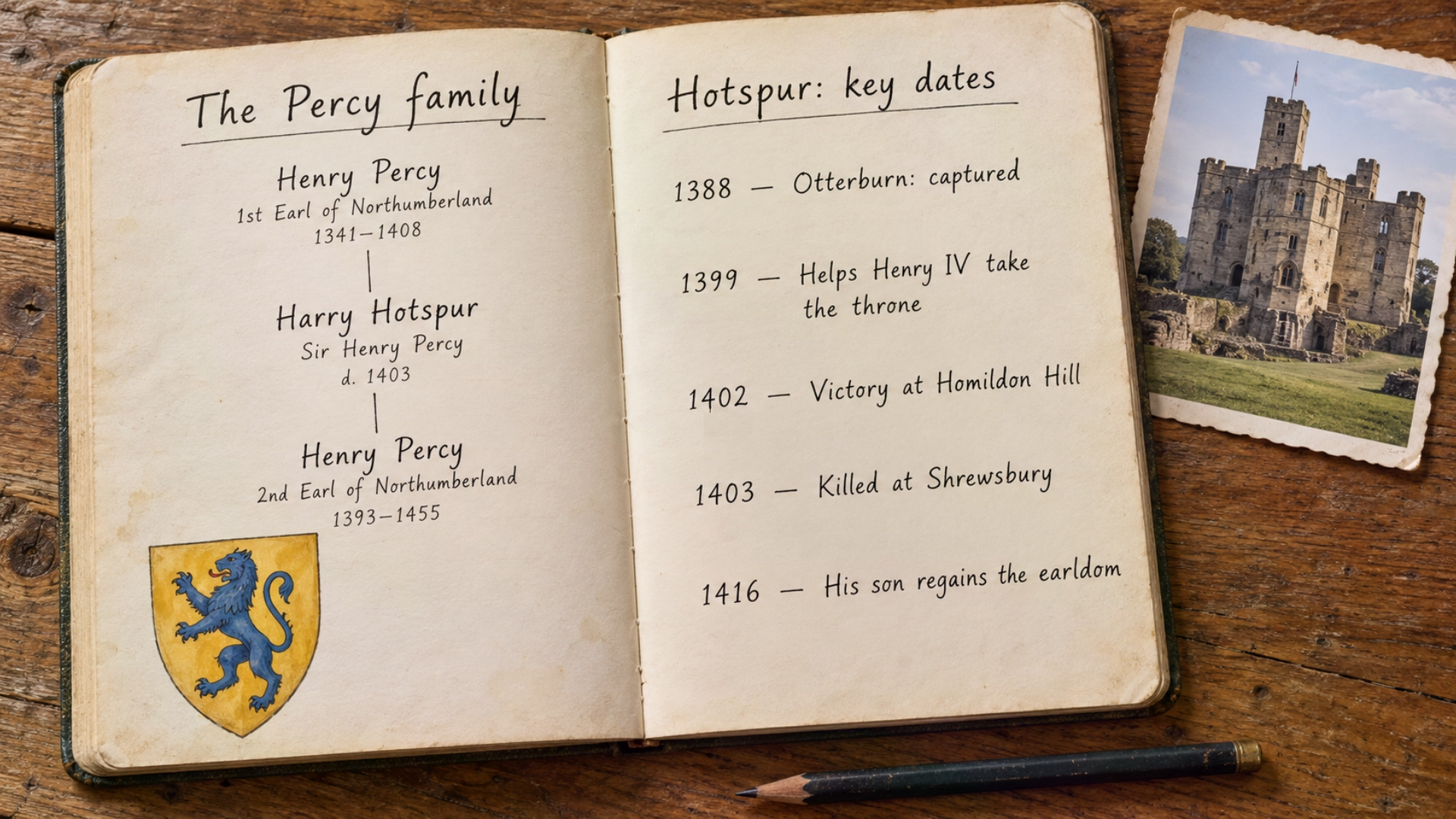
Our Henry was Sir Henry Percy, the eldest son of Henry Percy, first Earl of Northumberland. Alnwick Castle’s own history places his birth there in either 1364 or 1366. He became known as Harry Hotspur through his reputation for swift, fierce attacks against the Scots along the border.
His father was the earl. Hotspur never lived to inherit that title.
That distinction matters, particularly around Warkworth, where several generations of Percys have a habit of becoming one splendid, slightly muddled medieval gentleman.
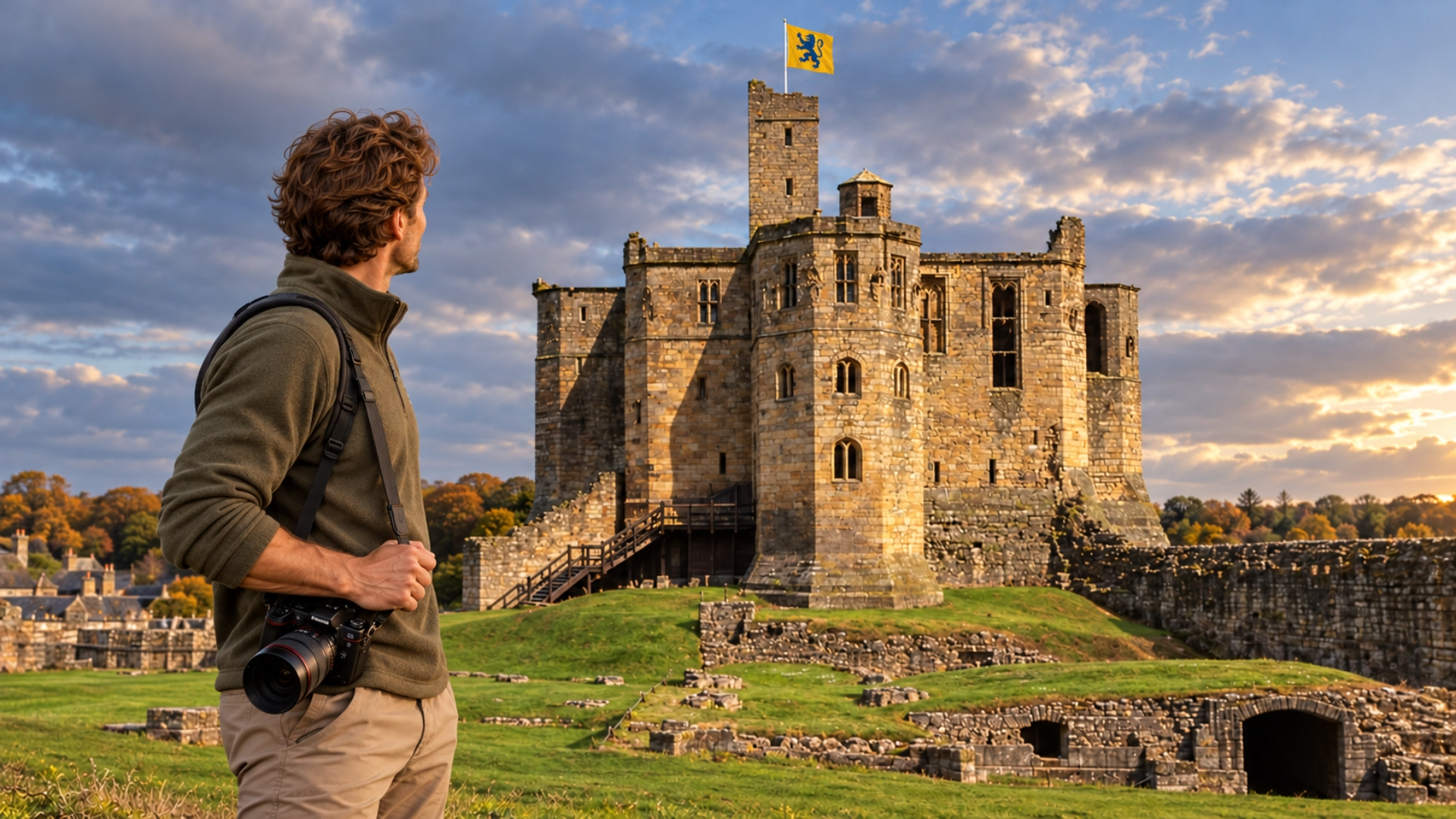
A Landscape with Something at Stake
It’s easy to admire a Northumberland castle as a beautiful object. Add some evening light and we’re all photographers.
But these were places from which powerful families managed land, defended their interests and negotiated their relationship with the Crown.
Alnwick was the Percys’ chief Northumberland holding throughout the Middle Ages, while Warkworth became their favoured residence. Hotspur’s father transformed Warkworth, almost certainly commissioning its remarkable great tower.
For me, that changes how the building reads. Its size and presence become a statement: this family expected to be taken seriously.
Hotspur grew into that world of military responsibility, family ambition and contested authority. Courage was useful. Knowing when to stop was useful too.
He seems to have found the first considerably easier.

Otterburn: The Hero Taken Prisoner
One of the best reasons to look beyond Hotspur’s reputation is that his career includes a thoroughly inconvenient defeat.
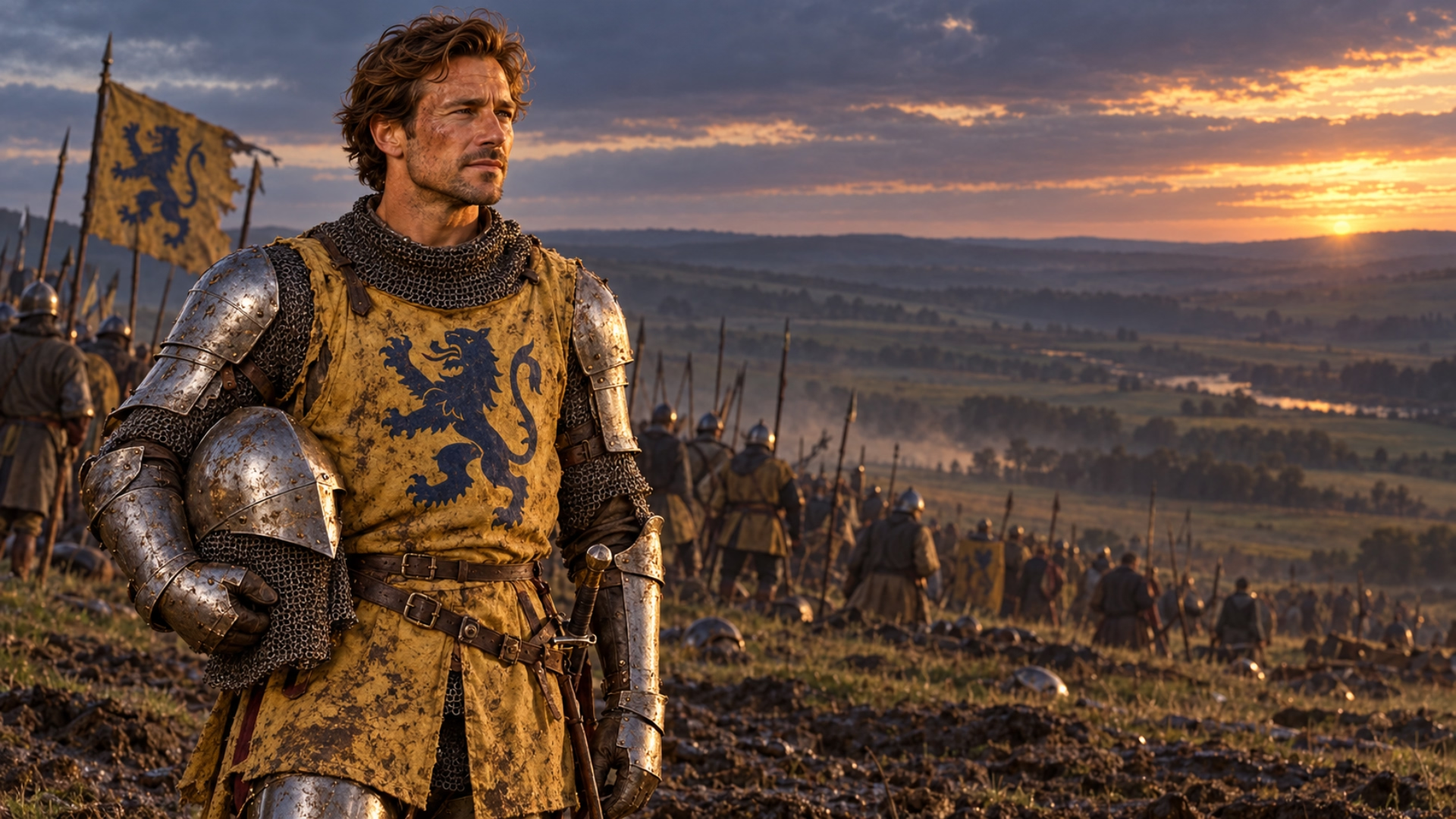
In August 1388, a Scottish raiding force confronted the English near Newcastle before withdrawing north. Hotspur pursued it into Redesdale, catching up near Otterburn.
The fighting took place in the failing evening light. By its end, the Scottish commander, James, Earl of Douglas, was dead—but the Scots had won. Hotspur and his brother Ralph were captured and held for ransom. The precise August date remains disputed.
There is something arresting about that combination: victory for an army whose leader had fallen, captivity for the man whose name became shorthand for martial daring.
It unsettles the tidy version of medieval warfare, where the bravest knight wins and everyone knows when the story has finished.
For anyone drawn inland from the coast, Otterburn gives Hotspur’s story another Northumberland setting. His history reaches well beyond castle walls.
Helping a King to the Throne
In 1399, Hotspur and his father helped Henry Bolingbroke overthrow Richard II and become Henry IV.
It was an alliance with consequences. The new king owed much to a family with formidable influence in the north.
By 1403, their relationship had broken down. The grievances included money owed for military service, competing authority in Wales and the king’s failure to ransom Hotspur’s brother-in-law, Sir Edmund Mortimer. The Percys had also defeated a Scottish army at Homildon Hill in 1402. Military success had failed to produce a lasting political settlement.
From a distance, it’s tempting to turn this into a familiar tale of northern independence confronting royal interference.
I’d be careful with that.
Hotspur belonged to a powerful aristocratic family defending its position. His courage can be admired while his ambitions are examined. Those two things sit quite comfortably together—and make him more interesting.
Shrewsbury: Where the Story Breaks
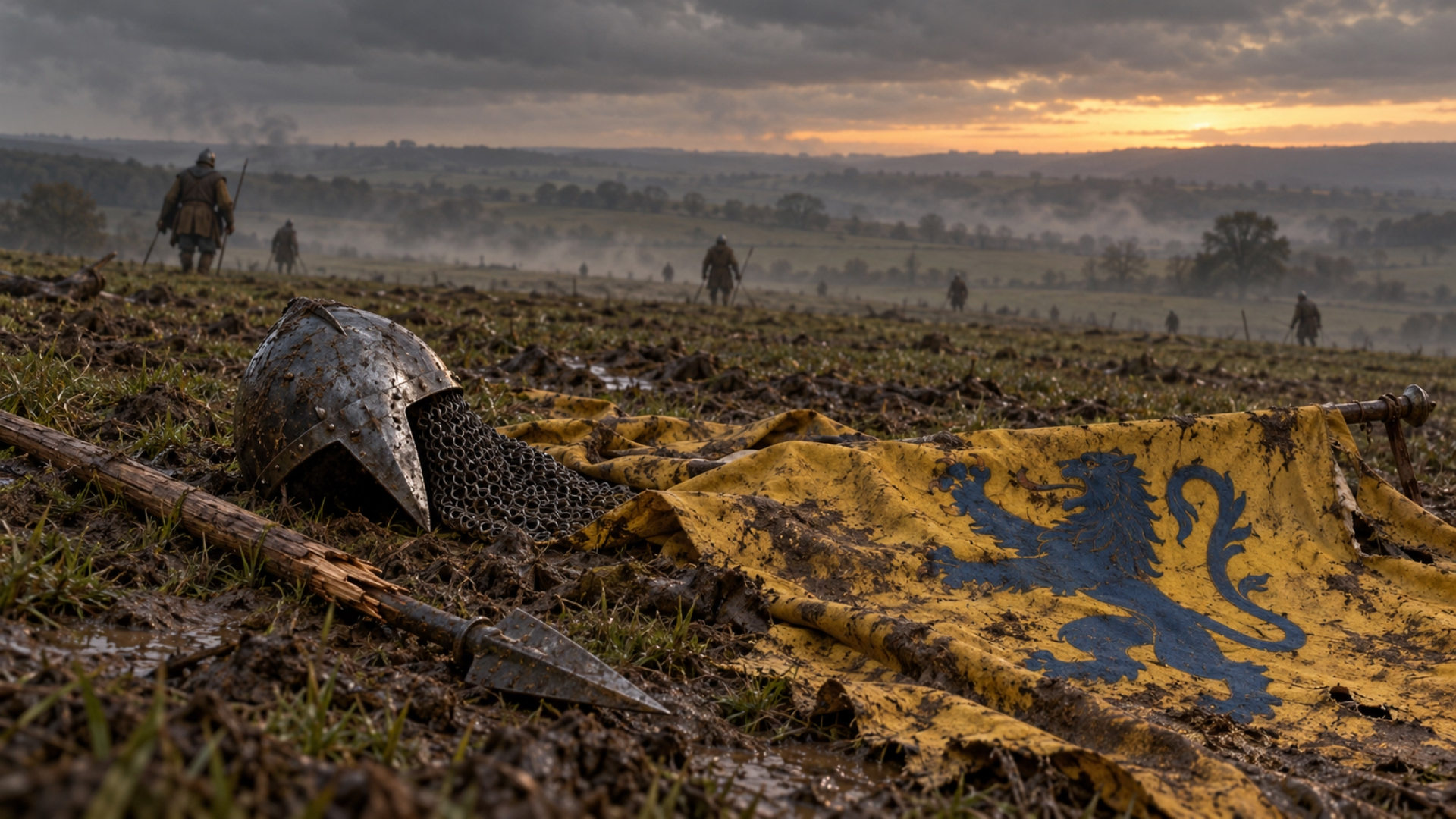
On 21 July 1403, Hotspur’s rebellion met the king’s army near Shrewsbury.
He was killed in the fighting. His army was defeated.
Even death failed to settle matters immediately. When rumours circulated that Hotspur had survived, Henry IV had his body exhumed and publicly displayed. It was subsequently dismembered, a grim demonstration of what rebellion could cost.
That is the point where the romance of the restless knight falls away.
Behind the famous name was a violent struggle whose consequences extended far beyond the men directing it. Any affection for Hotspur ought to leave room for that reality.
Back in Northumberland, the family’s troubles continued. Warkworth surrendered to Henry IV in 1405 after the earl became involved in another unsuccessful conspiracy. Hotspur’s son eventually recovered the family inheritance and earldom under Henry V in 1416.
The Percy story carried on. Hotspur’s part was over.
The Man Shakespeare Helped Us Remember
Then came another life, this time on the stage.
In Henry IV, Part 1, Shakespeare made Hotspur a vivid presence: courageous, impatient and increasingly at odds with a king his family had helped establish. The play brings his rebellion into the story of Prince Hal, the future Henry V.
It’s a powerful introduction to the character, provided we remember that a playwright’s task is to make compelling theatre.
The distinction is worth keeping. There is the historical Percy, whose actions survive through records and accounts, and the Hotspur shaped by centuries of performance and retelling.
Tom can admire both. I may occasionally require him to specify which one he means.
Why He Belongs in a Northumberland Guide
For me, Hotspur’s greatest appeal is the way his story joins places together.
Alnwick offers the family connection. Warkworth reveals the scale of Percy power. Otterburn brings the fighting into the upland landscape. Suddenly, separate outings become parts of a much larger story.
That’s one of the pleasures of getting to know Northumberland properly. A name becomes a person; a castle becomes someone’s home, stronghold and gamble.
I can understand why Tom is drawn to him. There’s energy in Hotspur’s story, and nerve, and a refusal to remain quietly in the background.
There’s also a useful warning about the distance between being fearless and being right.
Peter’s note: Get to know Harry Hotspur before your next look at Alnwick or Warkworth. He brings an extraordinary human presence to the stonework. I’m happy for Tom to have his hero—provided we stop short of acquiring a horse and declaring against the king.
Peter
The Percy family’s home for over 700 years and Hogwarts in the first two Harry Potter films, with glorious Italianate State Rooms. Open late March to October.
View in Listed →A dramatic medieval castle overlooking the village and the River Coquet, with a well-preserved keep, dog-friendly grounds, and a scenic riverside walk to the Hermitage.
View in Listed →Show Day in Warkworth
Tom
An early Coquet-side walk, a proper Northumberland breakfast at Bertram's, Warkworth Show and a castle Tom somehow forgot was this good.
Read the story →The Sunday That Refused to Go to Plan
Lucy
A quiet riverside walk in Alnwick became a detour to Charlton Hall, hours in Alnwick Castle’s State Rooms and a hunt for Sunday lunch that ended in a warm corner with Meg asleep beside us.
Read the story →The Border Reivers: A History
Lucy
The history behind Preston Tower's thick walls — three centuries of border raiding, the families who lived by it, and how the word 'blackmail' came to be.
Read the story →
Join the conversation
Got somewhere we should try? Tell Tom & Lucy below.