Good to Know
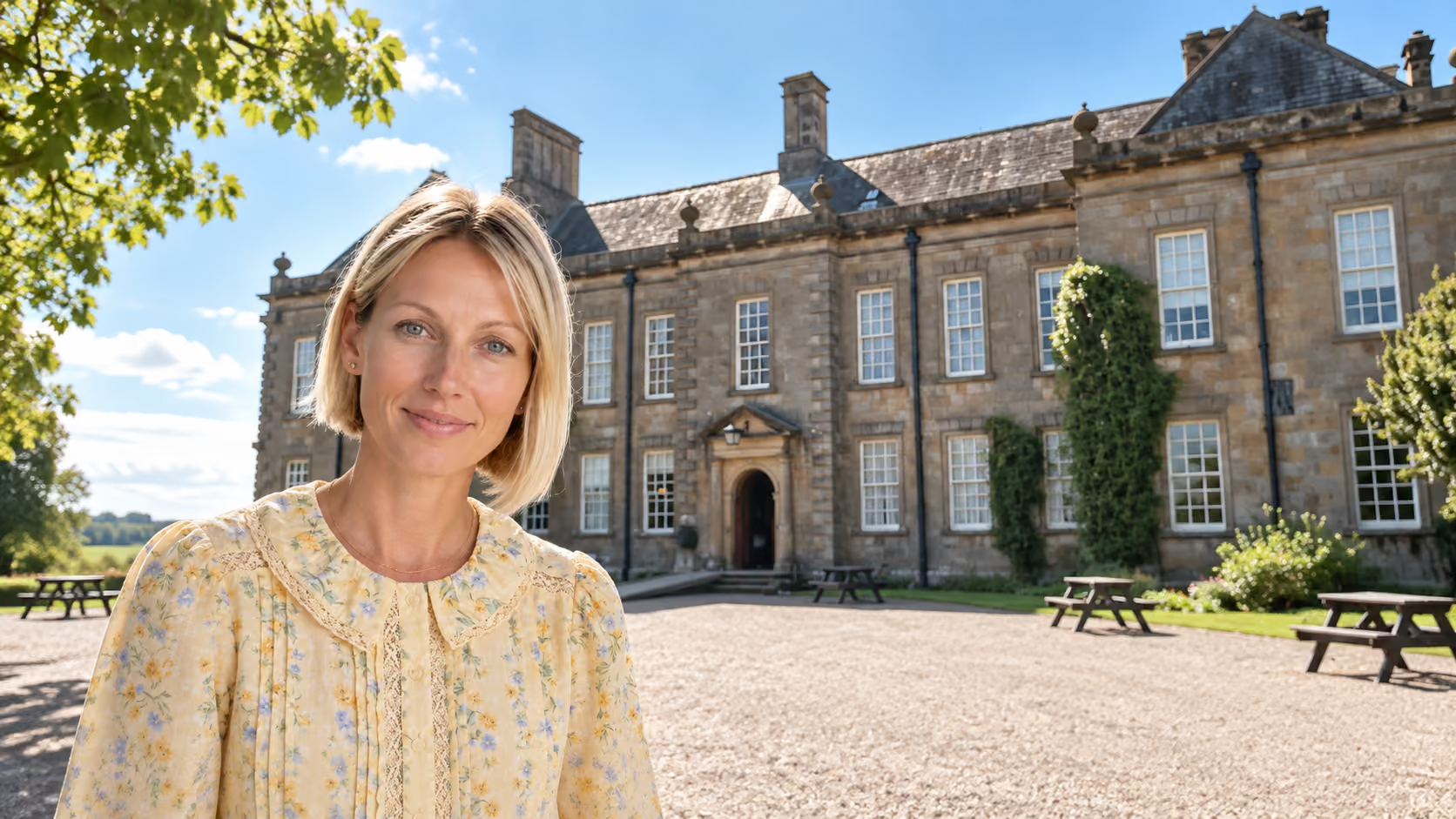
Wallington is the National Trust's big country estate near the village of Cambo, about twenty miles north-west of Newcastle. Think of it as a whole day rather than a house visit: a grand 17th-century hall full of curiosities, a walled garden tucked away beyond the woods, riverside paths along the Wansbeck, and an estate where red squirrels, otters and — more recently — beavers all call home.
We've walked the grounds with Meg and Flynn, but we haven't been inside the house yet. That's saved for a rainy day.
From the coast it's roughly an hour's drive, which makes it a proper excursion rather than a quick stop. For families it's ideal: four play areas, a family cycle trail and, by the National Trust's own admission, an impressive selection of puddles.
Tom's Notebook
- Best for: Families, walkers, garden lovers and anyone happy to wander without a plan.
- Dog friendly: Very. Wallington is rated two pawprints by the National Trust, with dogs welcome on leads across the parkland, woodland trails and even the walled garden. Not inside the house.
- The Walled Garden: Don't walk past it like we nearly did. The entrance is understated, but behind it are 4.5 acres of borders and paths, the Mary Pool, and benches sheltered from the wind.
- Walks: The gentle 2.6-mile River Walk along the Wansbeck is a lovely, unhurried loop. Longer options include the 6.3-mile Wannie Line walk along an old railway line.
- The house: Still on our list. Look out for the painted Central Hall, the dolls' houses and the cabinet of curiosities.
- With children: Four play areas, including an adventure play area with a zip line, play fort and rope bridge, plus the Dragon cycle trail (1.5km green or 4.5km blue route). Seasonal bike hire is available at weekends and in school holidays.
- Wildlife: Red squirrels, otters, a wildlife hide in West Wood, and a beaver reintroduction project on the estate.
- Food & drink: The Clocktower Café in the courtyard, plus kiosks around the grounds. The raspberry and pistachio sponge comes highly recommended.
- Getting there: Free parking for National Trust members, included in the ticket for everyone else. There are EV charge points (bring your own cable). The 419 bus runs a Saturday circular from Morpeth, and arriving by bus or bike gets non-members 20% off admission.
- Accessibility: Mobility scooters can be booked free of charge, 48 hours ahead. Some steep slopes, gravel and uneven woodland paths.
- H&S tip: Pack a layer even on a sunny day. The estate can be surprisingly breezy, but the walled garden is a perfect suntrap.
Wallington Hall — A Brief History
Set among rolling parkland, woodland and beautiful gardens near Cambo, Wallington Hall has a history stretching back more than 600 years. Once a fortified medieval home, it became an elegant country estate shaped by the Blackett and Trevelyan families before being gifted to the nation.
1415 — A Medieval Stronghold
The earliest recorded reference to Wallington describes a fortified tower belonging to William Strother. In an age of Border Reivers and Scottish raids, defence was an important consideration for Northumberland's wealthy landowners.
1475 — The Fenwick Family
Wallington passes into the hands of the influential Fenwick family, who develop the medieval stronghold into a substantial country residence.
1689 — The Blacketts Arrive
Sir William Blackett, a wealthy Newcastle merchant and mine owner, purchases Wallington from Sir John Fenwick. He replaces much of the old fortified building with a grand country house, incorporating parts of the medieval structure.
1739–1746 — A Georgian Transformation
Sir Walter Calverley Blackett commissions architect Daniel Garrett to remodel Wallington into an elegant Palladian mansion. Magnificent interiors, ornamental plasterwork and new formal gardens transform the estate.
1760s — Capability Brown's Influence
Celebrated landscape gardener Lancelot 'Capability' Brown is commissioned to design lakes at nearby Rothley Park, part of the wider Wallington estate. Brown was born in the nearby village of Kirkharle in 1716.
1777 — The Trevelyan Family Inherits
Following the death of Sir Walter Blackett, Wallington passes to his nephew Sir John Trevelyan, beginning a family association that will last into the 20th century.
1791 — A Home for Natural History
John Trevelyan and his wife Maria make Wallington their home. Maria's inherited collections of natural history specimens and ceramics eventually become an important part of the house's remarkable displays.
1853–1854 — The Magnificent Central Hall
Sir Walter and Lady Pauline Trevelyan commission Newcastle architect John Dobson to enclose the original open courtyard, creating Wallington's spectacular Central Hall.
1850s–1860s — Northumberland's History in Paint
Artist William Bell Scott decorates the Central Hall with eight enormous Pre-Raphaelite paintings depicting scenes from Northumbrian history. Lady Pauline Trevelyan and her artistic circle, including John Ruskin, also contribute decorative artwork.
1889 — An Estate Free of Debt
Sir George Otto Trevelyan celebrates paying off the remaining mortgages on Wallington, partly through earnings from his successful historical writing.
1937 — A Remarkable Decision
Sir Charles Philips Trevelyan announces his intention to give Wallington, its contents and surrounding estate to the National Trust, ensuring its preservation and public enjoyment.
1941 — A Gift to the Nation
The transfer to the National Trust is formally signed. The donation is extraordinary in its scale, encompassing not just the house but thousands of acres of farmland, woodland and parkland.
1952 — National Recognition
Wallington Hall receives Grade I listed building status, recognising its exceptional architectural and historical importance.
1968 — The National Trust Takes Full Control
Following the deaths of Sir Charles and Lady Mary Trevelyan, management of the house and estate passes entirely to the National Trust.
Today — In the Care of the National Trust
Wallington Hall and its extensive estate are owned and managed by the National Trust. Visitors can explore the historic house, remarkable art collections, beautiful walled garden, lakes, woodland trails and family-friendly grounds.
The estate also supports an ambitious programme of nature recovery, protecting its landscapes and wildlife for future generations.
More than six centuries after its first recorded appearance, Wallington remains one of Northumberland's most treasured country estates.