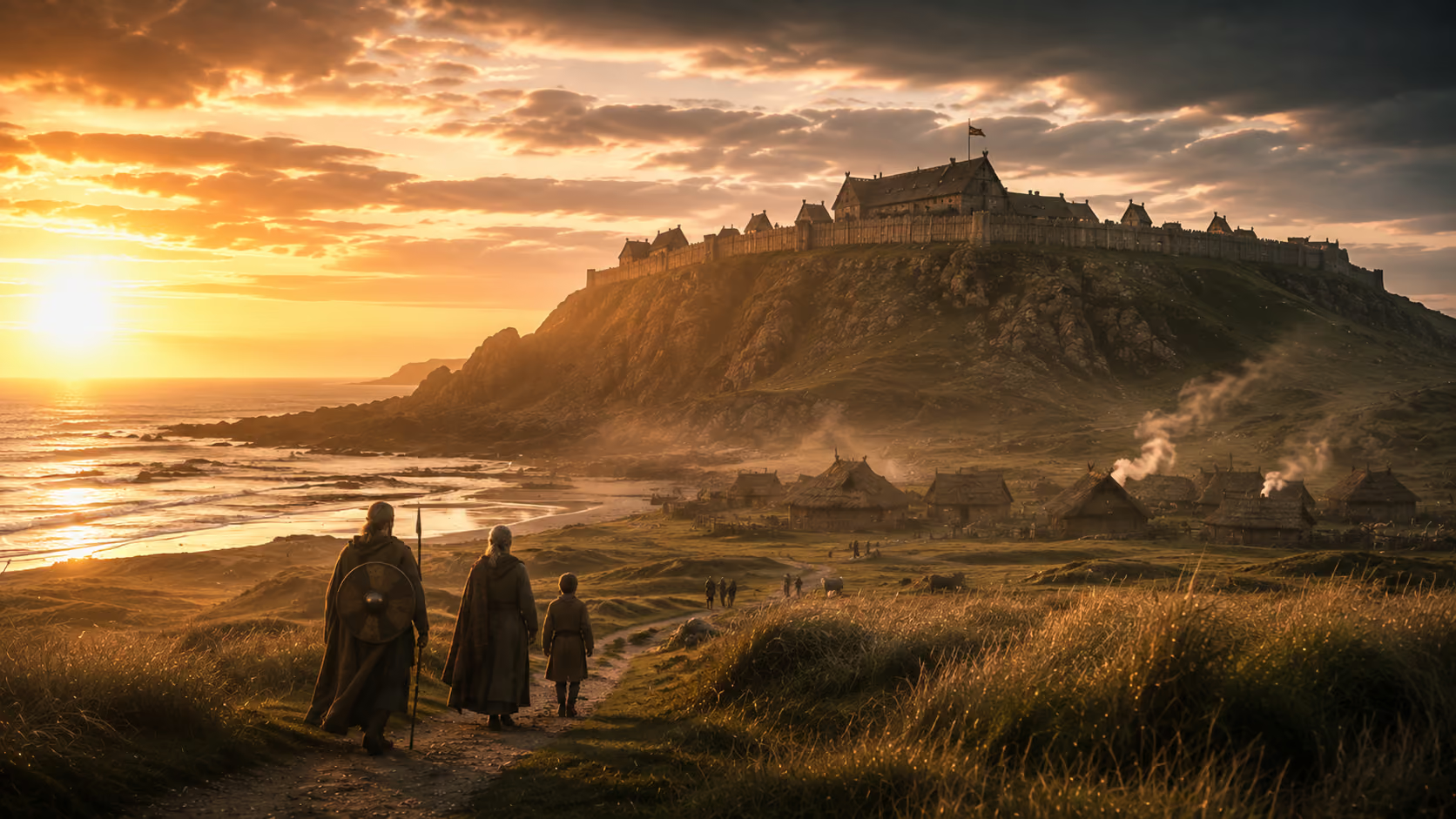
We'd been meaning to get somebody to explain Northumberland's history properly.
Tom had tried.
After approximately seven minutes Lucy suggested we ask Peter instead.
Sensible woman.
Peter is the person we tend to consult when we find an old stone in a church wall, a ruined tower beside a road or a name on a map that clearly has a story attached to it.
He knows about kings, saints, battles, castles and, rather worryingly, a great deal about medieval cattle thieves.
So every now and again we're going to hand him the Journal.
We may regret this.
Over to you, Peter…
There is something rather wonderful about Northumberland.
You can arrive knowing almost nothing about its history and still have a very good time.
There are beaches, castles, little fishing villages, hills, pubs, market towns and roads where occasionally you can drive for miles without seeing another car.
But spend a little time here and certain names begin following you around.
Hadrian. Oswald. Aidan. Cuthbert. The Vikings. The Percys. Border Reivers.
You'll find them on information boards, castle walls, church windows, pub signs and place names. You'll hear their stories on Holy Island, at Bamburgh and along Hadrian's Wall.
And gradually you realise something.
This beautiful, quiet corner of England has had a remarkably noisy past.
So before you head out exploring, here's my introduction to the history beneath your feet.
No examination at the end. Promise.
First things first. Northumberland or Northumbria?
Today we're exploring Northumberland, the county tucked into the north-east corner of England beneath the Scottish border.
But go back roughly 1,400 years and the map looked very different.
There was once a kingdom called Northumbria.
And it was enormous.
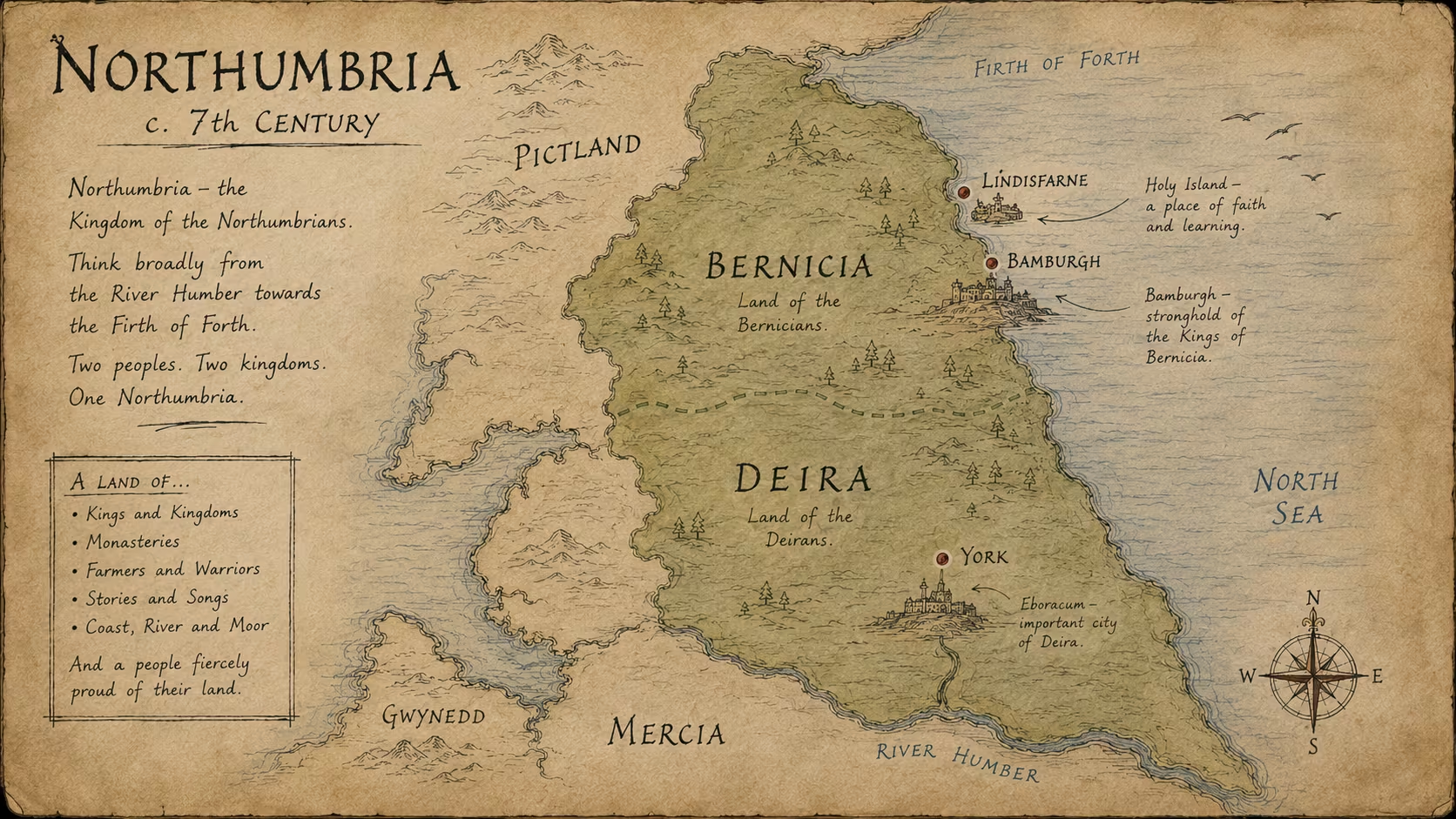
It developed from two earlier kingdoms — Bernicia in the north and Deira further south — and during its great period in the seventh century Northumbrian power stretched across much of northern Britain.
Think broadly from the River Humber towards the Firth of Forth.
York was important in the south.
But up here, Bamburgh was one of the great royal centres of Bernicia and Northumbria.
That castle you photograph today stands on a great volcanic outcrop which has been a place of power for far longer than the familiar stone walls suggest.
And just a few miles along the coast was another place that would become famous across the medieval Christian world.
Lindisfarne. We'll come to that.
First, though, we need to go back further. Much further.
Before the kings
People were living in this landscape thousands of years before anybody thought of calling it Northumberland.
If you walk the hills and uplands you'll find traces of prehistoric settlements, burial places, ancient tracks and rock carvings.
Northumberland can sometimes feel empty.
It wasn't.
People farmed here, buried their dead here and travelled through these valleys long before written history arrived.
Then came the Romans.
And one Roman in particular left his name all over the place.
Hadrian
Name to remember: Emperor Hadrian
In AD 122 the Roman emperor Hadrian ordered the construction of what became the most famous Roman frontier in Britain.
Hadrian's Wall.
It ran for 73 miles from the Tyne to the Solway and marked a controlled frontier of the Roman Empire.
Forget the idea of one lonely wall with Romans peering nervously over the top.
This was an extraordinary military landscape of forts, milecastles, towers, roads, soldiers, civilians and settlements.
Walk around Housesteads, Vindolanda, Chesters or Corbridge and you aren't looking at a reconstruction of Roman Britain.
You're walking through it.
There are still gateways. Foundations. Bath houses. Roads. Even wheel ruts.
Stand on the Wall on a cold Northumberland afternoon with the wind pushing across the hills and one question becomes unavoidable.
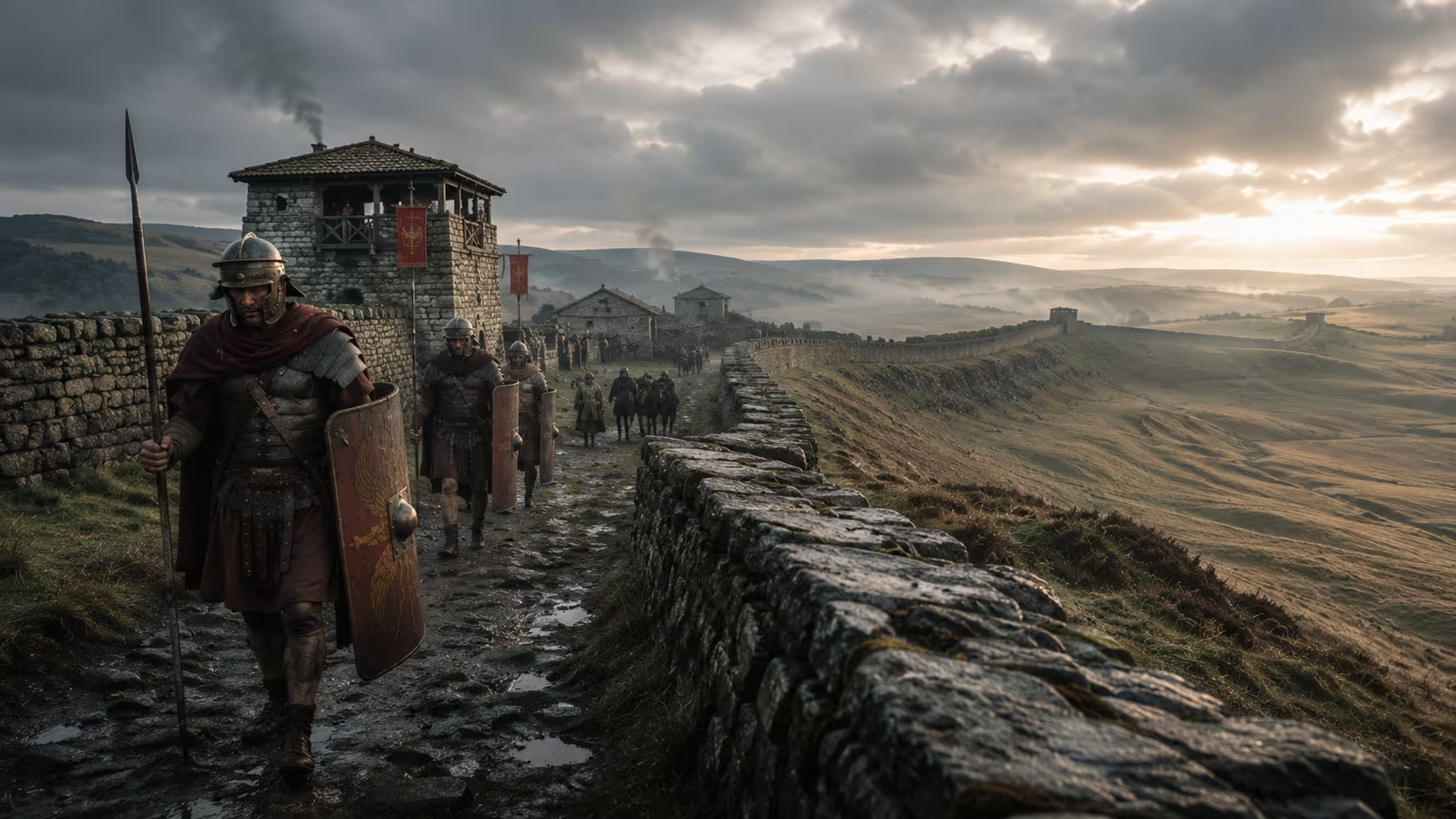
What must some poor Roman posted here from somewhere warm have thought?
The Romans eventually left Britain in the early fifth century.
The Wall remained.
But the political world around it changed completely.
And that's where our story really starts gathering pace.
The Kings of Northumbria
After Roman rule collapsed, Britain fragmented into competing kingdoms.
Eventually two northern kingdoms — Bernicia and Deira — became associated together as Northumbria.
There were battles. Exiles. Assassinations. Kings replacing kings. Families returning from exile to reclaim thrones.
It makes Game of Thrones look surprisingly well organised.
But one king in particular is worth remembering when travelling around Northumberland.
Oswald
Name to remember: King Oswald
Oswald became king in AD 634.
He had spent part of his earlier life in exile amongst the Christian community of Iona off the western coast of Scotland.
When he returned to rule Northumbria, Christianity came with him.
And Oswald made a decision which would change the history of this coastline.
He asked Iona to send him a missionary.
They sent a monk named Aidan.
Oswald gave him a small tidal island close to the royal fortress at Bamburgh.
The island was Lindisfarne.
Aidan and the Holy Island
Name to remember: St Aidan
Aidan founded his monastery on Lindisfarne in AD 635.
From here monks travelled through Northumbria teaching, preaching and establishing churches.
Imagine the geography.
Bamburgh — royal power. Lindisfarne — spiritual power. Only a few miles apart.
That relationship helped make this little stretch of the Northumberland coast one of the most important places in early medieval Britain.
And then came perhaps the most famous Northumbrian saint of them all.
Cuthbert
Name to remember: St Cuthbert
You will encounter Cuthbert everywhere. Holy Island. The Farne Islands. Churches. St Cuthbert's Way. Place names. Stories.
He was a monk, hermit and eventually Bishop of Lindisfarne, but the stories surrounding him made him something much greater in the medieval imagination.
After his death in 687 his reputation for holiness grew enormously.
When his tomb was opened eleven years later, the monks claimed his body had not decayed.
Cuthbert became a saint. Pilgrims came. Lindisfarne became wealthy and influential.
And somewhere amongst this remarkable religious community one of Britain's greatest medieval treasures was created.
The Lindisfarne Gospels.
For a while, this windswept little island was one of the great centres of religion, scholarship and art in Europe.
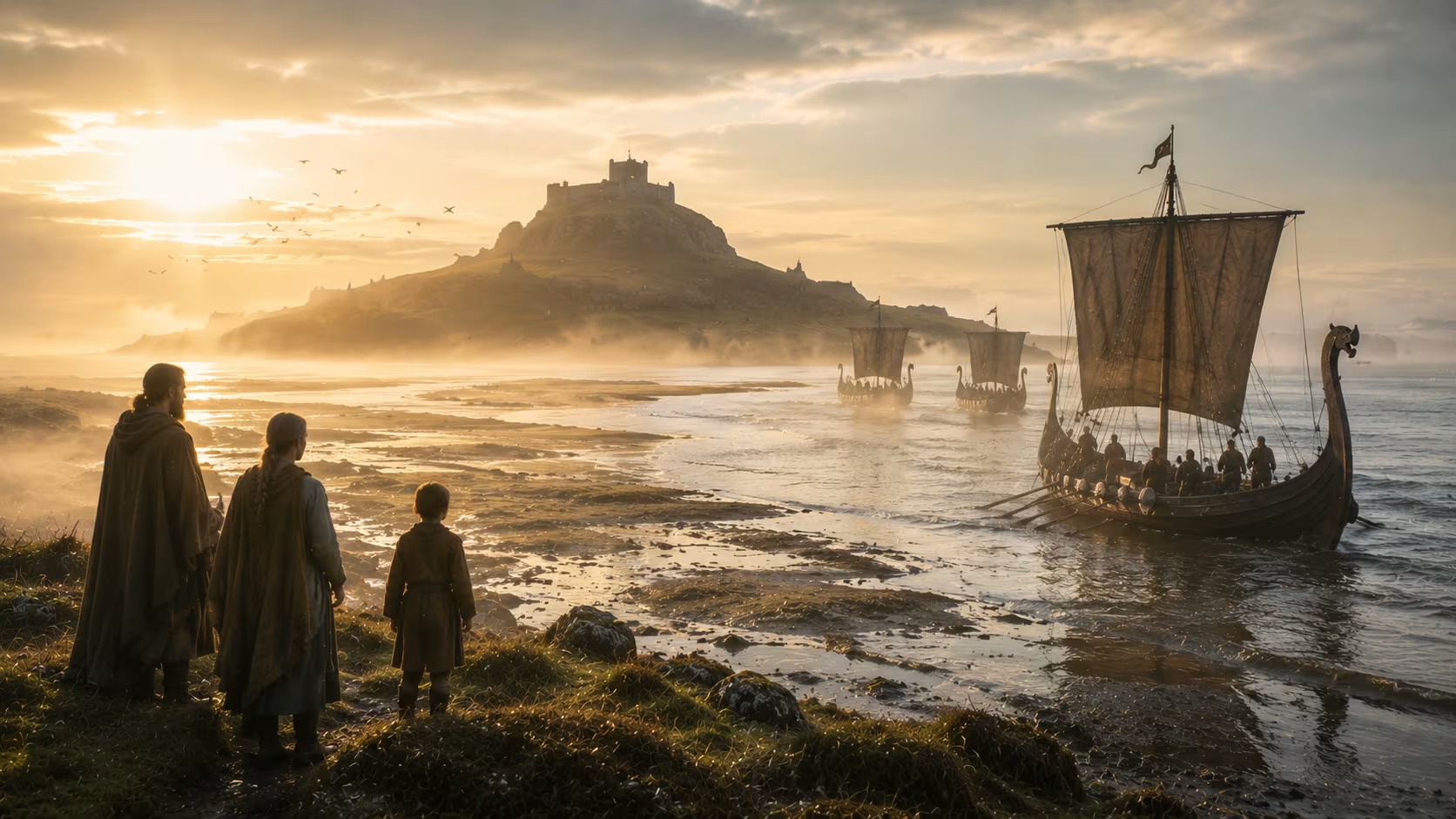
Then, in 793, ships appeared offshore.
The Vikings Arrive
Date to remember: AD 793
You don't really need to remember many dates from this story.
Remember this one.
793 — the Viking raid on Lindisfarne.
There had been earlier Scandinavian activity around Britain, but the violent attack on Lindisfarne became one of the defining moments of the Viking Age.
Imagine what it represented.
This wasn't merely somewhere with a few monks living beside the sea.
Lindisfarne was sacred. The home of Cuthbert. A centre of learning. A place protected, people believed, by God.
And the Vikings attacked it.
The psychological shock travelled across Europe.
It wasn't the end of Lindisfarne, but it announced a new and dangerous age.
Viking raids intensified and Scandinavian armies eventually conquered large parts of England.
Northumbria's golden age was over.
But its story certainly wasn't.
Normans, castles and a troublesome North
Fast-forward to 1066.
William the Conqueror takes England.
The north proves rather less enthusiastic about the arrangement.
Northern resistance led to William's brutal campaigns known as the Harrying of the North.
And over the following centuries something began appearing across this landscape in ever greater numbers.
Castles.
Northumberland has them everywhere.
Bamburgh. Alnwick. Warkworth. Dunstanburgh. Prudhoe. Norham.
Some were royal strongholds. Some belonged to powerful families. Some guarded routes and rivers. Some faced Scotland.
Because now another fact of Northumberland life becomes important.
The border.
England versus Scotland
For centuries this was frontier country.
Armies travelled north. Armies travelled south. Castles were besieged. Villages were raided. Land changed hands. Kings fought kings.
And if you're exploring Northumberland you'll repeatedly encounter one family name.
Percy
Name to remember: Percy
The Percy family became one of the great powers of northern England.
Their name is inseparable from Alnwick Castle and Warkworth Castle, and from the politics and warfare of medieval England.
One Percy in particular became legendary.
Harry Hotspur
Sir Henry Percy — Harry Hotspur — was a warrior whose reputation eventually found its way into Shakespeare.
His life involved fighting the Scots, rebellion against Henry IV and the complicated business of medieval families being friends with the king right up until the moment they very much weren't.
Once you know the Percy name, you'll start spotting it everywhere.
The Border Reivers
And then we come to one of my favourite chapters.
Because for several centuries the Anglo-Scottish borderlands were home to people who developed their own rather practical interpretation of property ownership.
They were called the Border Reivers.
Families such as the Armstrongs, Elliots, Grahams, Charltons and Robsons raided across the border stealing cattle, horses and occasionally people.
English families raided Scotland. Scottish families raided England. Sometimes Scottish families raided Scotland and English families raided England.
National loyalty could become rather flexible when there were several dozen good cattle in the next valley.
What mattered was family. Your surname. Your alliances. And revenge. Lots of revenge.
This was a world of fortified farmhouses, watch towers, nighttime raids and exceptionally fast horses.
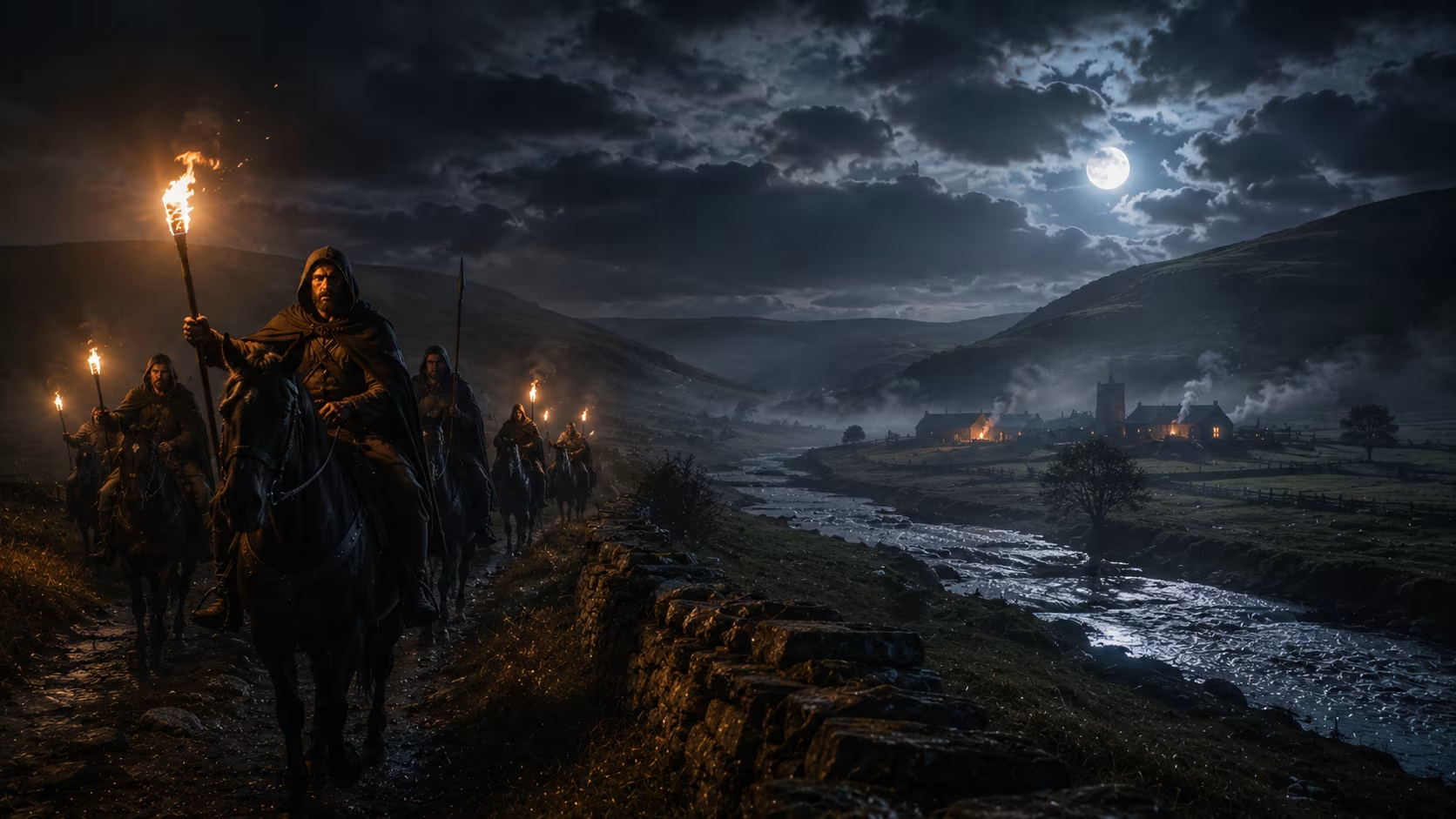
When you travel through places like Tynedale, Redesdale and the Northumberland border country, you're travelling through Reiver country.
Even old Roman ruins occasionally found new employment.
At Housesteads, the Armstrong family later used the remains of the Roman fort while developing a formidable reputation for cattle rustling and horse theft.
Almost 1,500 years after Roman soldiers had guarded the frontier, another group of heavily armed men were still causing trouble in exactly the same spot.
There is something wonderfully Northumbrian about that.
Union and a quieter border
Things finally began changing after 1603, when James VI of Scotland also became James I of England.
For the first time England and Scotland shared a monarch.
The old frontier gradually became less violent.
Reiving was suppressed. The castles became homes rather than military necessities. Towns grew.
Mining, farming, fishing and industry increasingly shaped the county.
But the older landscape never disappeared.
And that's perhaps the important bit.
The history is still here
You don't have to visit a museum to find Northumberland's history.
Walk along Hadrian's Wall and you're following the edge of an empire.
Stand beneath Bamburgh Castle and you're beneath one of the great royal centres of Anglo-Saxon Northumbria.
Cross the causeway to Holy Island and you're travelling towards the monastery of Aidan and Cuthbert — and the shore the Vikings attacked in 793.
Walk through Alnwick or Warkworth and you're in Percy country.
Head inland towards Redesdale and you're entering the world of the Border Reivers.
And scattered between them are thousands of smaller stories.
Ruined towers. Churches. Old tracks. Battlefields. Castles on rocky outcrops. Names carved into stone.
History here isn't particularly tidy.
Romans reused prehistoric landscapes. Saxons reused Roman stone. Normans rebuilt Saxon places. Reivers moved into Roman forts. Farmhouses were built from medieval ruins.
And somehow it all ended up becoming the Northumberland we wander through today.
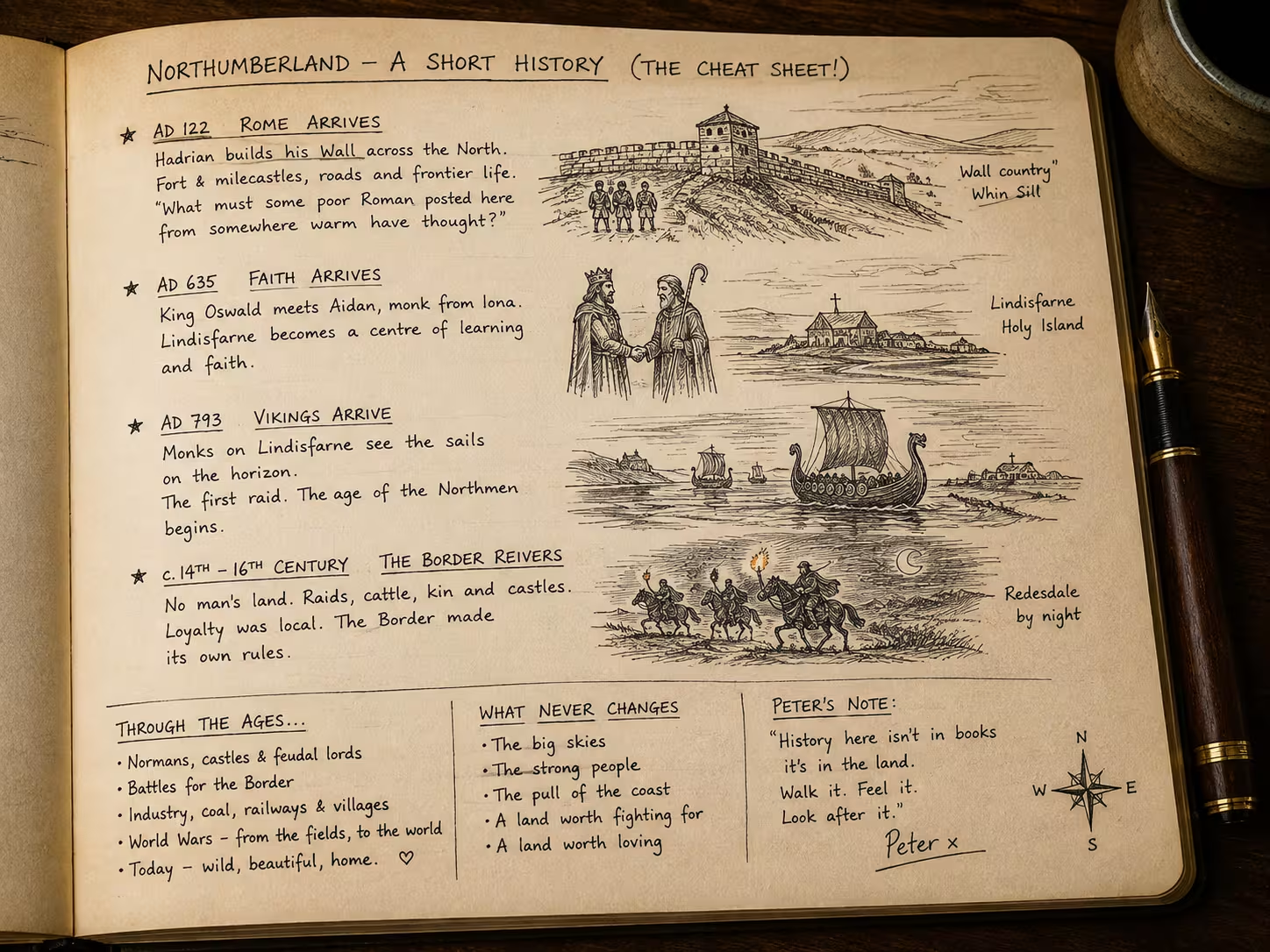
Seven names worth remembering
If you remember nothing else before your visit, remember these:
Hadrian — the Roman emperor whose frontier still crosses the county.
Oswald — the Northumbrian king who helped make this region one of the great centres of early Christianity.
Aidan — the monk who founded the monastery on Lindisfarne.
Cuthbert — Northumberland's great saint whose story runs from Lindisfarne to the Farne Islands and eventually Durham.
The Vikings — whose attack on Lindisfarne in 793 announced a new age.
The Percys — the great northern dynasty behind places including Alnwick and Warkworth.
The Border Reivers — the families who made the Anglo-Scottish frontier one of the wildest places in Britain.
Learn those and Northumberland begins making a little more sense.
Although I should probably add one more.
Bede.
The Northumbrian monk and scholar whose writings preserved much of what we know about this extraordinary early kingdom.
But we'll save him for another day.
There are 1,500 years of stories here. I don't want to spoil everything on your first walk.
A final thought
Perhaps that's why Northumberland gets under your skin.
At first you notice the space. Then the beaches. Then the castles.
Eventually you begin noticing the stories connecting them.
A Roman emperor. An exiled king. An Irish monk. A hermit on an island. Viking ships appearing over the horizon. Medieval lords fighting Scotland. Families riding through the hills at night to steal each other's cattle.
All occupying the same landscape.
So next time you're standing somewhere quiet — Bamburgh beach perhaps, or the hills above Hadrian's Wall — have another look around.
The place might be quiet now.
It certainly hasn't always been.
— Peter
Peter occasionally joins us in the Journal to tell the stories behind the places we visit. Tom generally asks the questions. Peter generally corrects him.