Tom: I stood for a while by Grace Darling’s grave in St Aidan’s churchyard. It feels a funny thing to say about a grave, but it was peaceful there. The churchyard is beautifully looked after. I’d come to see where Grace was buried and ended up staying a little longer than I meant to, thinking about this young woman who’d got into a rowing boat with her dad to save people she’d never met.
Peter: If you go looking for her, there are two things to see in the churchyard. The one you’ll probably notice first is the canopied memorial, with Grace carved in stone and an oar at her side. Her grave is nearby, where she’s buried with her parents.
What happened at Longstone Lighthouse?
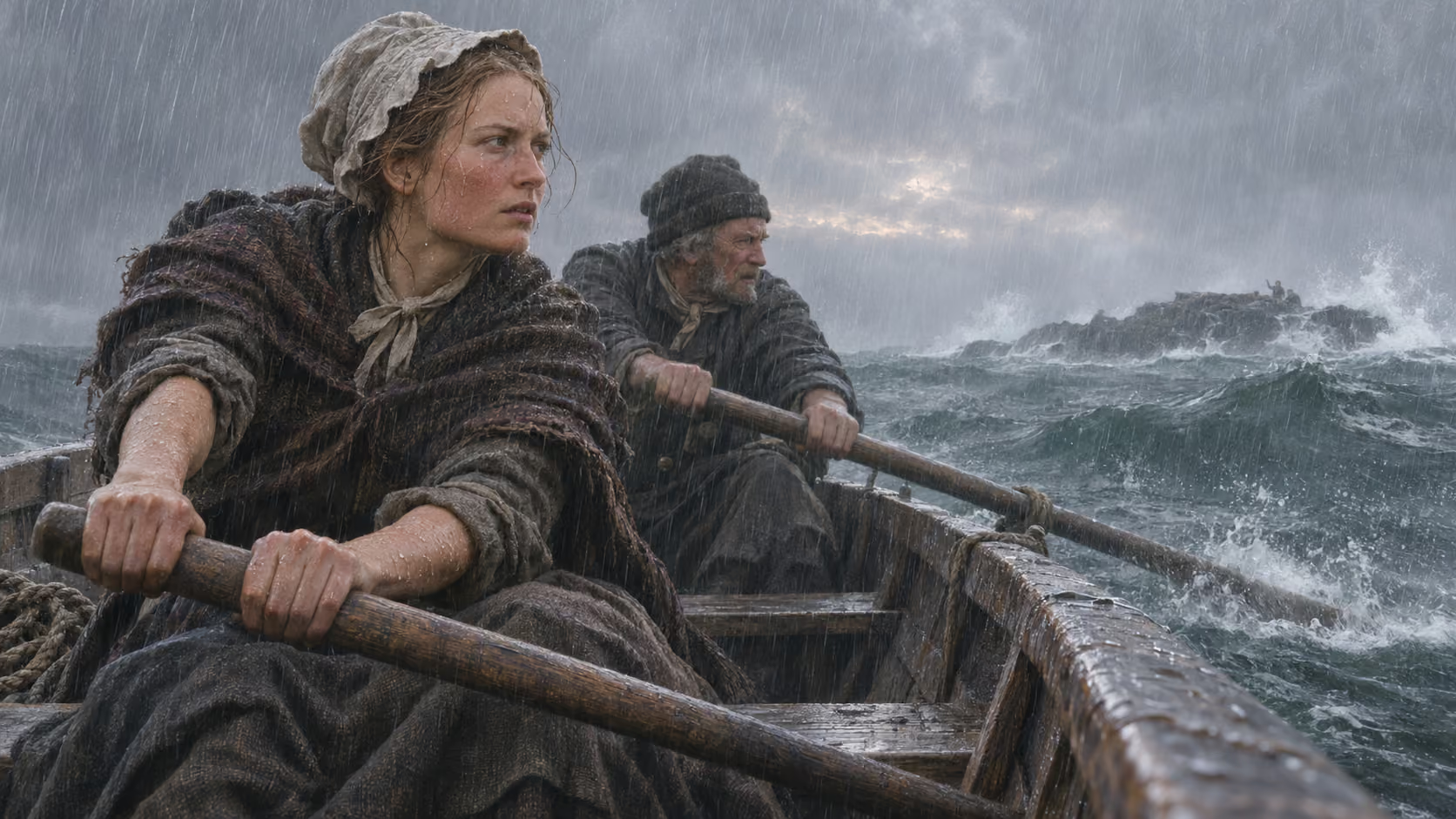
Tom: We’d recently been to the museum, just across the road. It’s free, and they do a super job of telling the story. I remember listening and, for a moment, I could almost feel the rain on my face. I was out there in the gloomy morning light, rising and falling with each swell, wondering whether I’d make it back to Longstone. Then I looked at the boat again. There really wasn’t much of it, was there?
Peter: That’s the actual coble they rowed. Grace was 22 on 7 September 1838, when the steamship Forfarshire broke apart on Big Harcar in the Farne Islands. From Longstone Lighthouse, she spotted survivors clinging to the rock. She and her father, William, took the coble out. When they reached the rock, William went ashore to help while Grace kept the boat in position. They brought five people back to the lighthouse. William went out again with two of the men they’d rescued and brought back four more.
Tom: Holding the boat there is the bit I keep coming back to. You’ve got people trying to get aboard, the sea’s moving you about, and your dad’s out on the rock. How long would a minute feel then?
Would we have gone?
Tom: I thought about Lucy. Grace was younger than she is now. Would Lucy have gone?
I decided she absolutely would. I can hear myself saying, Come on, Lucy. Those people need our help. Though knowing Lucy, she’d probably have had an oar in her hand by the time I’d got the words out.
We’d have been terrified. I’d like to think we’d have gone anyway. I suppose that’s the easy thing to say when you’re standing on dry land in Bamburgh.
Peter: Grace and William knew those waters and knew how to handle the coble. Even with that experience, they had to decide whether they could reach the rock and get people off it. I think looking at the boat in the museum brings that decision closer than any painting of the rescue could.
Back in Bamburgh
Tom: It’s sad how little time she had after that morning.
Peter: Four years. Grace died of tuberculosis in Bamburgh in October 1842, aged just 26. She’d spent time away during her illness and came back to the village towards the end.
Tom: I’d do the museum first if you’re visiting. Spend a little time beside the coble. Then cross the road to St Aidan’s, have a look at the memorial and find the grave itself. There’s no rush. I was glad I stopped there a while.
Visiting Grace Darling’s museum and grave
- RNLI Grace Darling Museum, Bamburgh. Free entry. The museum houses the original coble along with Grace’s letters and family portraits. Check opening times before you go. RNLI Grace Darling Museum
- St Aidan’s Churchyard. Just across the road from the museum. Look for both the canopied memorial and the family grave nearby. St Aidan’s Church
Further reading from the RNLI’s account of the rescue and the Friends of Berwick and District Museum and Archives.